
Advertorial · Updated August 21, 2026 · 10 minute read
DOG HEALTH • FEEDING
Why Your Dog Is Hungry All Day on His Diet (and the Bowl That Fixes It)
You cut the food. He’s begging by 6 pm. The scale barely moved. Here is what actually went wrong, and it wasn’t you.
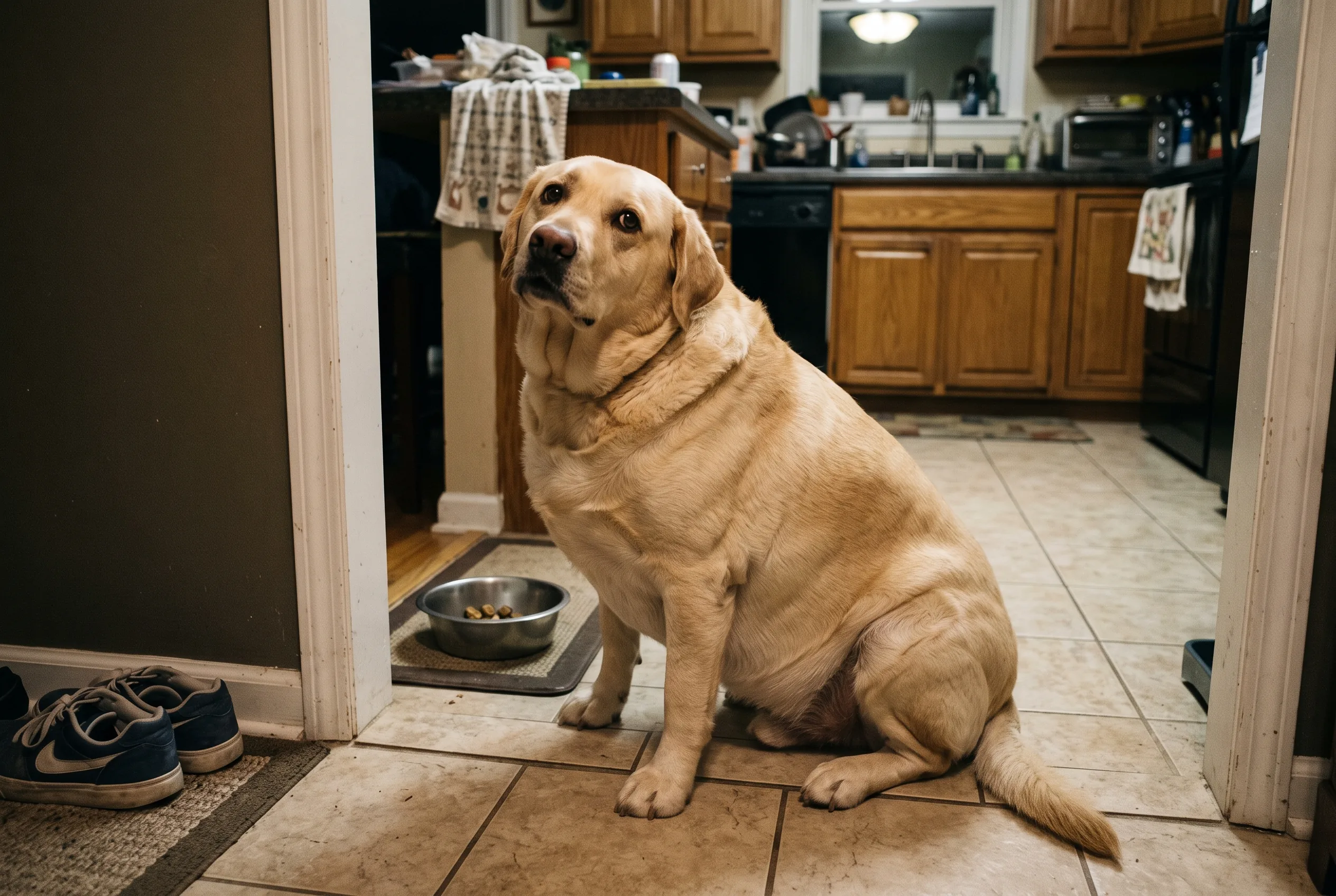
Author’s note: I have this conversation once a day. The owner did everything right, and the diet still broke at dinner. Here is what I tell them.

By Dr. Daniel Whitmore, DVM
Veterinarian focused on senior canine health and healthy aging · August 21, 2026 · 10 min read
“She’s hungry and not really losing weight.”
If I had a dollar for every time an owner said that to me, I could retire.
You cut her food from 3 cups to 2. She noticed. She follows you into the kitchen now. She stares. She scratches the bowl. Somebody in the house gives in.
Three weeks later she’s down half a pound. Maybe.
So you start to think some dogs just can’t lose weight. Or that a diet means a miserable dog for the rest of her life.
Neither is true. And the reason it failed is simpler than you think.
A Smaller Scoop Is Right. A Smaller-Looking Bowl Is the Problem.
Here is the part nobody tells you.
When you cut his food by a third, the math is right. Fewer calories go in. He should lose weight. Most dogs will, if the smaller amount actually sticks for eight weeks.
But your dog doesn’t see calories. He sees a bowl that used to be full and now isn’t. He eats it in forty seconds and looks up. And you see him seeing it.
That’s the moment every diet breaks. Not at the scale. At dinner.
That’s the moment every diet breaks. Not at the scale. At dinner.
Here is how it goes in most homes I talk to:
- The dog notices. One owner put it this way: “Have you tried reducing your dog’s food by 10%? They notice.” They do. Some scratch the bowl. Some follow you from room to room. Some sigh at you from the doorway.
- You feel cruel. “I just don’t know if 1 cup twice a day would just be cruel.” I hear that sentence every week. It isn’t cruel. But it feels cruel, and feelings decide what happens at 7 pm.
- Someone caves. A biscuit. The crust. The last of the cereal milk. “He’s still hungry.” Often it’s not even you. It’s a partner, a kid, a grandparent who thinks the dog looks sad.
- The deficit disappears. A few extras a day is enough to erase the whole cut. The scale stays put. You decide the diet “doesn’t work.”
You didn’t do anything wrong. You tried to solve a bowl problem with a math answer. The math was fine. The bowl wasn’t.
And you are not alone in this. In the latest national survey, 59 percent of dogs seen by vets were overweight. Most of their owners have tried something. Most of it broke at dinner.
Light Kibble, Green Beans, Pumpkin, Water. You Were Close Every Time.
Most owners who reach me have tried all of these. Every one of them is the right idea done halfway. Let me go through them, because the pattern matters.
The light or prescription kibble. Fewer calories per cup, yes. But it’s still a small, dry pile in the bowl. Your dog sees exactly what he saw before: less. Many dogs eat it for a day or two and then start leaving it. One owner told me her dog “ate it one day and then wouldn’t eat it anymore.” Another said her dog “looks at me like she’s being punished when I put her bowl in front of her.” Some owners report four, five, six poops a day from the sudden jump in fiber. And at fifty dollars a bag, you paid good money for a problem you still have.
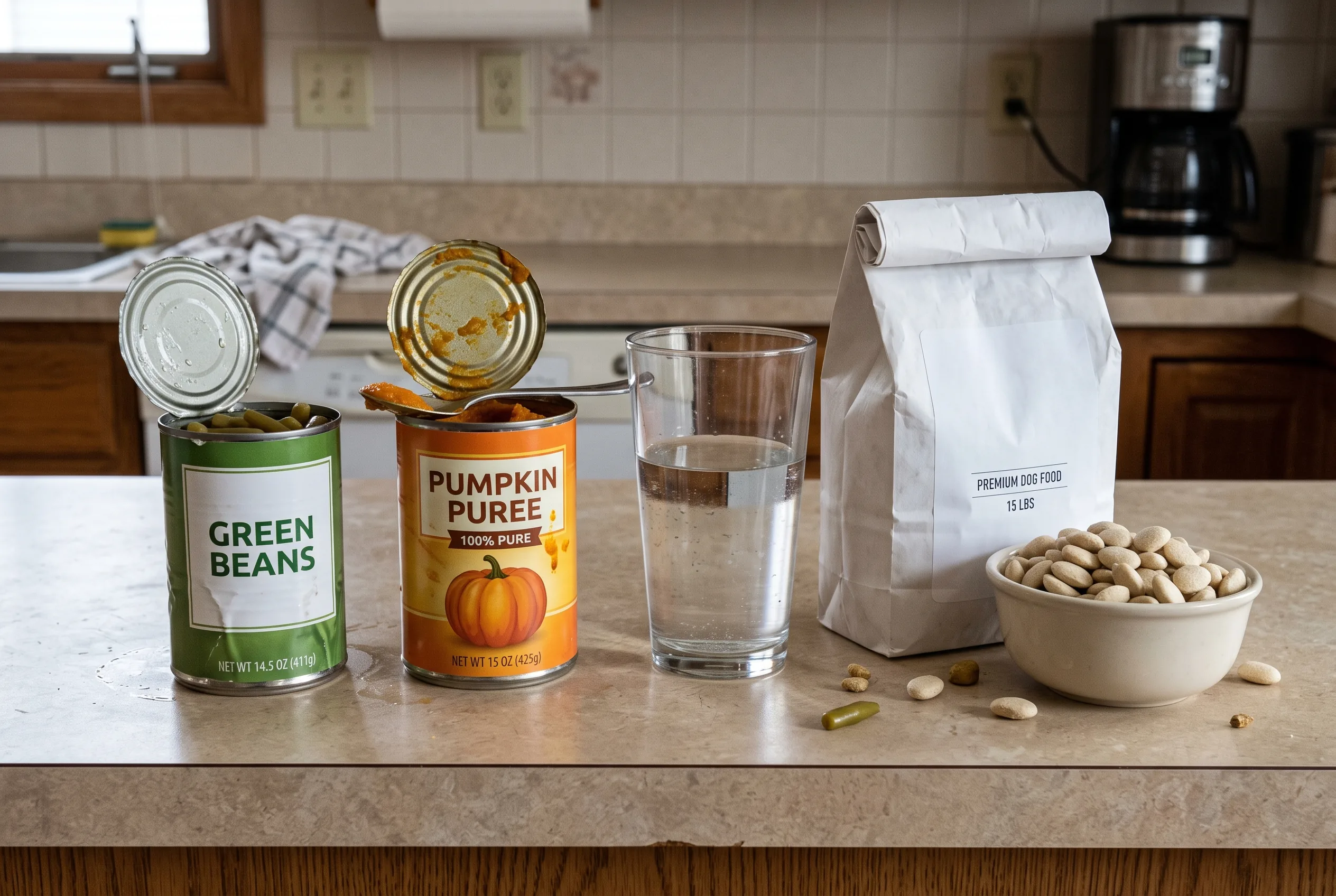
The green bean trick. Swap a quarter cup of kibble for green beans. This one works, and I’ll tell you why in a minute. Owners love it: “he feels like he’s getting a way bigger meal.” The trouble is the details. The sodium in canned beans. The dog who eats around them and leaves a neat pile. The night you run out. And the fact that “a handful” is not a measurement.
Pumpkin. Same idea, different can. One tablespoon is fine. Two tablespoons and you’re cleaning the carpet at 6 am. Plenty of dogs won’t touch it at all.
Adding water to the kibble. Right instinct. It just doesn’t hold. The water sinks to the bottom, the kibble floats, and the bowl looks the same as before. Most owners give up after a day.
The longer walk. Good for him. Not enough. A dog has to walk a very long way to burn off one extra biscuit, and a heavy dog often doesn’t want to.
Notice the pattern. The ones that worked a little all did the same thing: they put more in the bowl without putting in more calories.
That is the whole secret. You already found it. You just didn’t have a good way to do it every single night.
A Bowl of Soup Fills You Up on Fewer Calories Than a Handful of Crackers
You know this from your own kitchen.
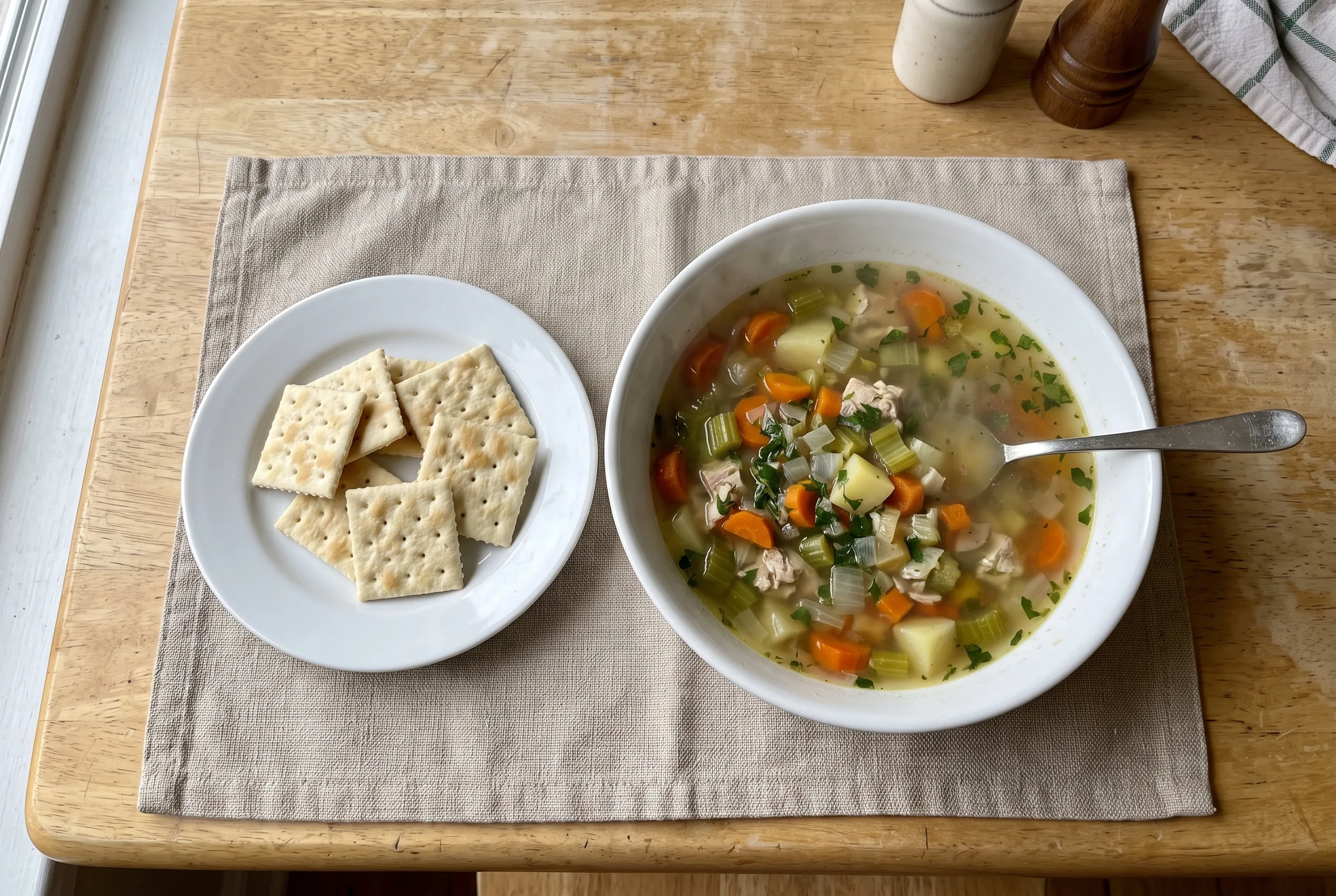
A big bowl of broth-based soup has fewer calories than a small plate of crackers. But you feel like you ate a meal. You put the spoon down and you’re done.
That’s because water and fiber take up space. Space in the bowl, and space in the stomach. Your eyes see a full bowl. Your stomach feels a full bowl. The calories are what they are.
Dogs work the same way. Give a dog less kibble but more to eat, and the diet stops feeling like a diet. To him, because the bowl is full. To you, because you’re not putting down a sad little pile.
Give a dog less kibble but more to eat, and the diet stops feeling like a diet.
The green beans were the soup. The pumpkin was the soup. You were right the whole time. Now let’s do it properly.
Four Things a Hungry-Dog Diet Needs, or It Won’t Last a Month
Before I tell you what I use, here is what I tell owners to look for. Hold any product, or any home trick, up against these four. If it misses one, it will break by week three.
- 1It has to add volume without adding calories that matter. Water and fiber, not fat, not more kibble. Peanut butter on top of a diet bowl is not a diet bowl.
- 2It has to be measured per pound of dog. “A handful of beans” is not a plan. “One scoop per 22 pounds” is. If you can’t write it on a sticky note for the person who feeds him on Tuesdays, it won’t survive.
- 3The dog has to want it. If he picks around it, it’s not a diet. It’s a standoff, and he will win.
- 4It has to work with the food he already eats. Switching brands starts a whole new fight. A diet that adds one step to the dinner you already make is a diet you’ll keep.
Now score what you’ve tried.
Green beans pass the first test and fail the other three. Pumpkin, same. Prescription kibble passes the second test and fails the third and fourth. Adding water passes the first and fails the rest.
That is why you’re reading this at 11 pm instead of sleeping.
Less Kibble. A Full Bowl. Thirty Seconds.
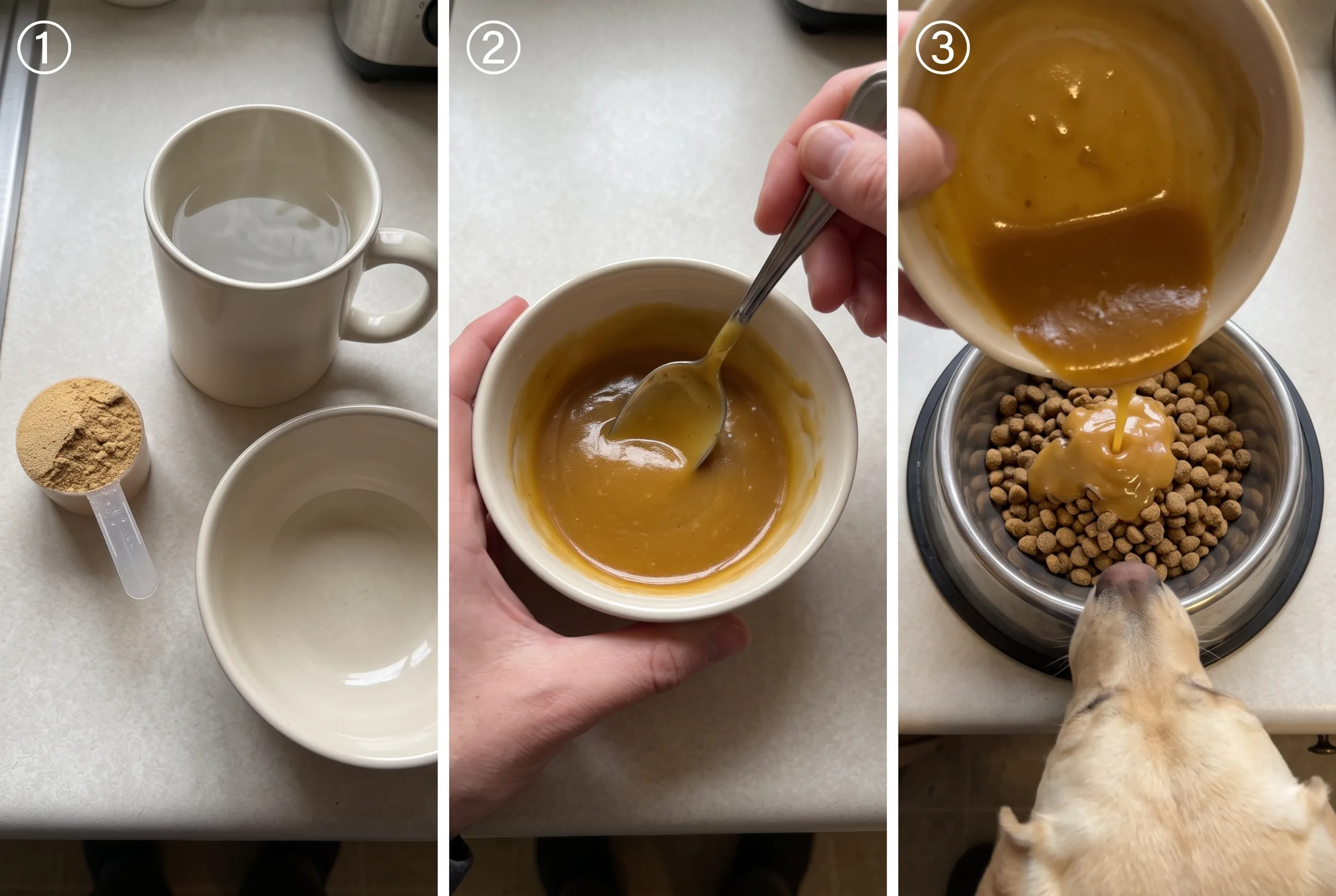
BOWLFUL is a powder. You mix one scoop with warm water, wait a minute or two, and it turns into a thick chicken gravy. You pour that over a smaller portion of the kibble your dog already eats.
That’s it. That’s the whole method.
Here is how it checks the four boxes:
- Volume without calories that matter. The gravy is mostly water and fiber. About half the powder is fiber, from gum arabic, pea fiber, psyllium husk and beet pulp. Chicken broth and chicken liver are in there for taste, not bulk.
- Measured. One scoop per 22 pounds of dog per day, split over two meals. The scoop has a half mark. A 22 pound dog uses half a scoop at breakfast and half at dinner. A 44 pound dog uses a full scoop each meal. A 600 gram can lasts a 22 pound dog about two months, a 44 pound dog about a month.
- He’ll want it. It tastes like chicken gravy, because it largely is chicken broth and chicken liver. Most dogs go for it at the first meal.
- Works with his food. You don’t switch anything. You feed less of it and pour this over the top.
The honest part. BOWLFUL does not make a dog lose weight by itself. Feeding less kibble does that. BOWLFUL is what makes feeding less something you can actually keep doing, because the bowl still looks like dinner.
And one more honest part. It’s a chicken base. If your dog can’t have chicken, this isn’t for him, and I’d rather tell you now.
What to Expect, Week by Week
I give every owner the same calendar. Stick it on the fridge.
- 1
Week 1
Full kibble portion, the same as before, plus the gravy on top. Nothing changes on the scale yet. That’s on purpose. This week is about the dog getting used to the gravy and his stomach getting used to the fiber. Most dogs take to it at the first meal. A few sniff it for a day. Almost all are in by day three.
- 2
Week 2
The kibble comes down one step. The bowl still looks full, because the gravy hasn’t changed. This is the week the old diet used to break. It won’t this time, because nothing looks different.
- 3
Weeks 3 to 4
Kibble at the reduced amount, up to 15 percent less than where you started. Now weigh him. A safe pace is 1 to 2 percent of his body weight a week. For a 60 pound dog that’s about half a pound to a pound a week. Slow is correct. Fast is a sign something else is wrong.
- 4
Week 3
Week 3 is where people quit. The scale often shows nothing the first time you check. Fat comes off unevenly, and a big drink of water can hide a pound. Don’t change anything. Weigh again in two weeks.
- 5
Weeks 5 to 8
The routine runs itself. Somebody else in the house can do it, because the instructions fit on the scoop. Most owners tell me the dog stops hanging around the kitchen after dinner somewhere in here. Not because he’s full of magic. Because he ate a full bowl.
If the scale hasn’t moved by week 6, the calories are coming from somewhere else. Treats, plate licking, the other dog’s bowl, the neighbor. Look there before you cut the kibble again.
What Owners Tell Me
These are owners who gave me permission to share their numbers.
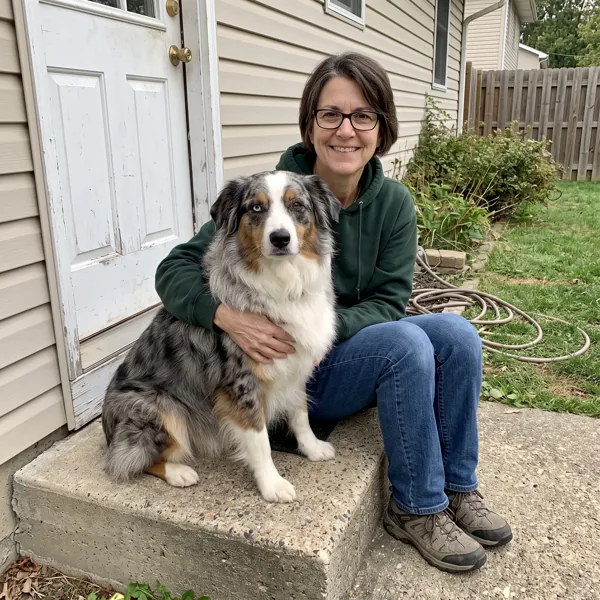
Donna and Cooper
Australian Shepherd mix, 7
“The first night, he licked the bowl and went back to check it again.”
63.7 lb · tried light and prescription food first, Cooper refused both after a few days
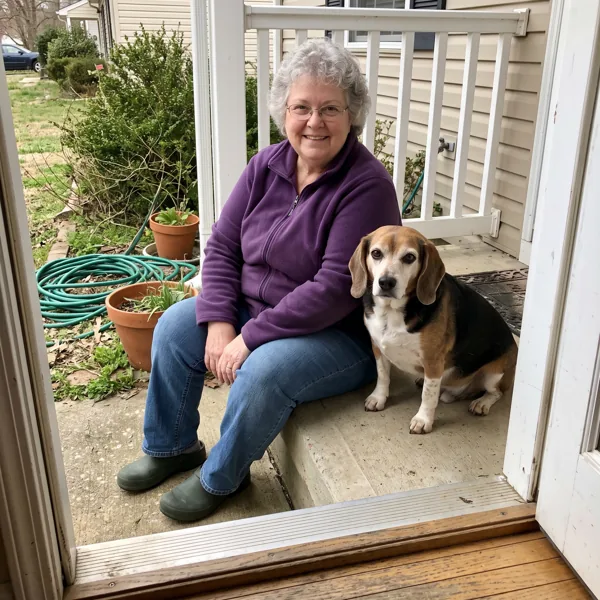
Nancy and Charlie
Beagle, 8
“He picks around green beans. Somehow he eats this.”
31.8 lb · refused pumpkin, picked around green beans · stools back to normal and firmer after about six days
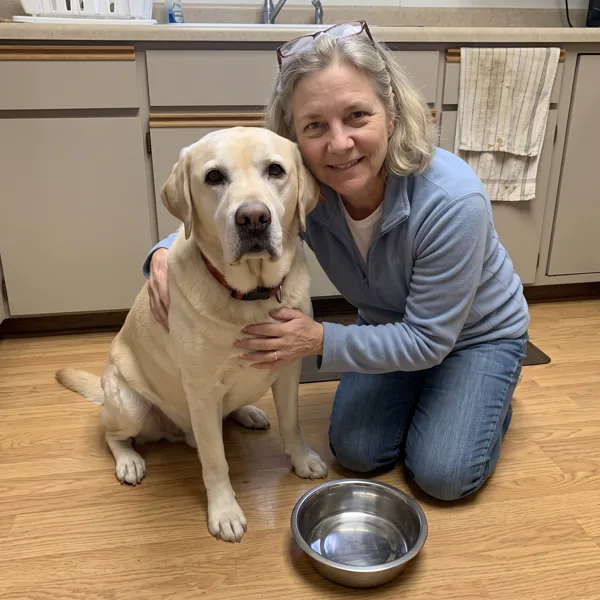
Susan and Buddy
Labrador, 8
“Buddy stared at me every night at 7 for seven months. The first night with the gravy he licked the bowl and went and lay down. Three and a half pounds in eight weeks, and my husband noticed the waist before I did.”
86.2 lb to 82.8 lb in 8 weeks · 4 scoops a day
Before You Start: Questions I Get Every Time
Won't a topper add calories?
Peanut butter does. Cheese does. A spoon of wet food does. BOWLFUL is mostly water and fiber. The calories in a scoop are small, and they’re already counted in the feeding plan. The kibble you take away is many times more than the gravy you add.
More fiber means more poop, right?
It can, if you go from zero to a full scoop overnight. That’s exactly why week 1 is a slow start. Most owners see normal stools, often a bit firmer. If you see loose stools, halve the scoop for a few days and build back up.
My dog is picky.
The base is chicken broth and chicken liver, which is about as safe a bet as there is with dogs. If your dog refuses chicken, or can’t have it, this isn’t for him.
Can't I just add water or green beans myself?
You can. It’s the same idea, and if it’s working for you, keep going. BOWLFUL is for the owners it stopped working for. It’s measured, it tastes like something, and it holds its shape in the bowl instead of sinking to the bottom. Most people who tried the beans already know why that matters.
Does it work with wet food or raw?
It’s made for kibble. It goes over wet food fine. For raw, ask your vet, because the fiber math is different.
What if he's still begging?
Some dogs beg because they’re bored, not hungry. If the bowl is full and he’s still working the room, that’s a habit, and habits fade in about two weeks when nobody pays. The dog who is actually hungry on a smaller bowl is a different dog. That’s the one this fixes.
Who This Is For, and Who It Isn’t
For:
- adult dogs your vet has said should lose a few pounds.
- Dogs who act starving on a smaller portion.
- Households where more than one person feeds the dog.
- Owners who have tried the light kibble or the green beans and are out of ideas.
Not for:
- puppies.
- Pregnant or nursing dogs.
- Underweight dogs.
- Dogs with a diagnosed condition that needs a prescription diet, unless your vet says yes.
- Dogs allergic to chicken.
The Short Version
Your dog can lose the weight. You were never the problem. The empty-looking bowl was.
Feed less kibble. Pour the gravy over it. Keep the bowl full. Weigh him in four weeks, and don’t panic if the first number hasn’t moved.
The next page has the full feeding plan by dog weight, the can sizes, and the guarantee.
Evidence Sources
- Association for Pet Obesity Prevention, 2022 U.S. Pet Obesity Prevalence Survey (59 percent of dogs overweight or obese) and 2024 Pet Owner Survey. APOP
- University of Liverpool, 2019: one in five owners always measures their dog's food; overweight dogs may live shorter lives. University of Liverpool
- Tufts University, Petfoodology: about 3 percent of owners know how many calories they feed. Petfoodology
- Cornell University, Riney Canine Health Center: safe weight loss of 1 to 2 percent of body weight per week. Cornell
These sources support the general discussion of canine weight and feeding habits. They are not studies of BOWLFUL.