
Advertorial · Updated August 21, 2026 · 8 minute read
DOG HEALTH • THE VET VISIT
The Vet Said “Lose a Few Pounds.” Here’s the Plan Nobody Handed You.
You got a number. You didn’t get a method. A veterinarian fills in the part your visit skipped.
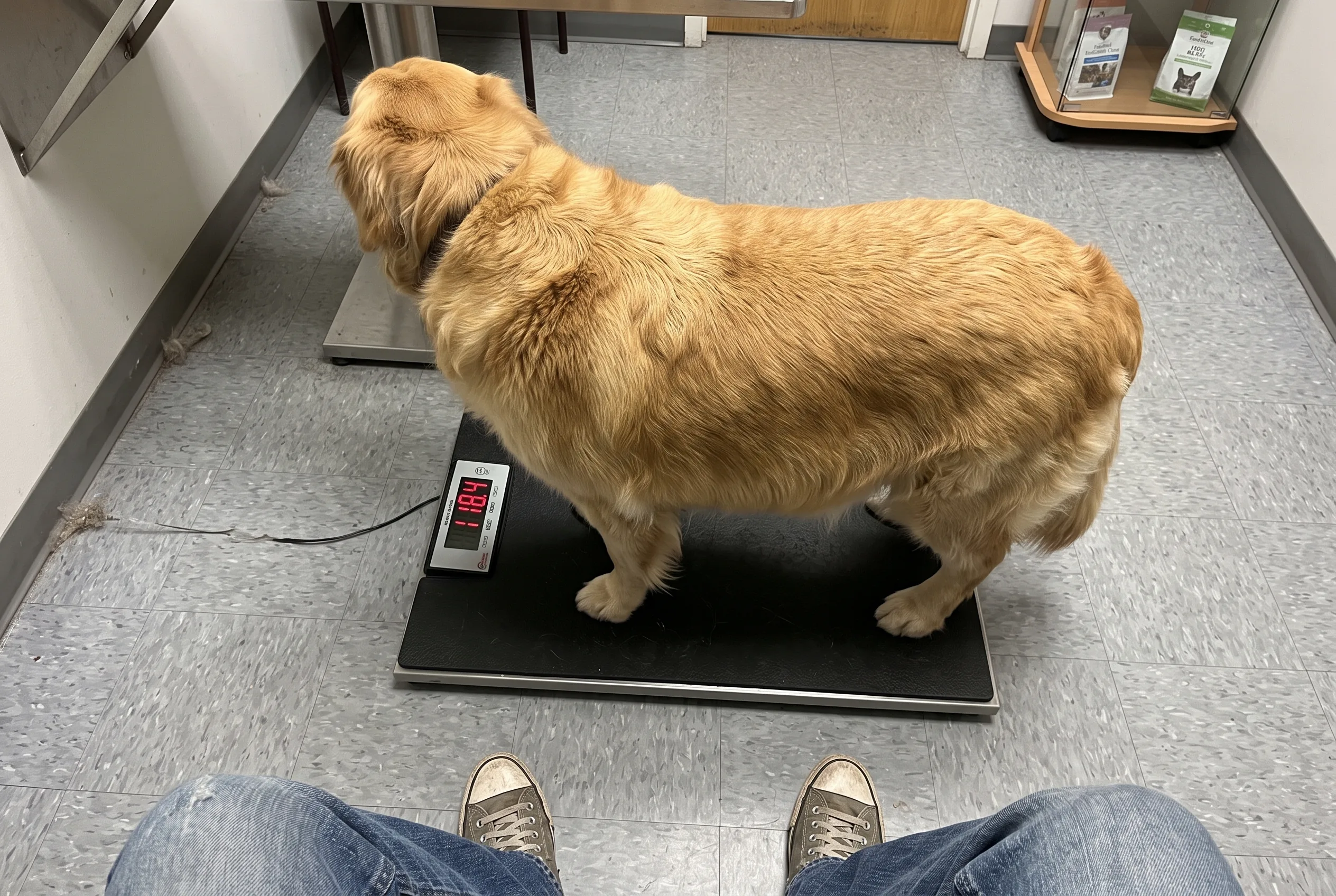
Author’s note: I am a vet. The weight talk is fifteen seconds, a number, and “feed a little less.” This is the part that should come after.

By Dr. Daniel Whitmore, DVM
Veterinarian focused on senior canine health and healthy aging · August 21, 2026 · 8 min read
“He could stand to lose a few pounds.”
You nodded. Maybe you felt a little judged. Maybe you thought, “Has she ever seen a Lab before?”
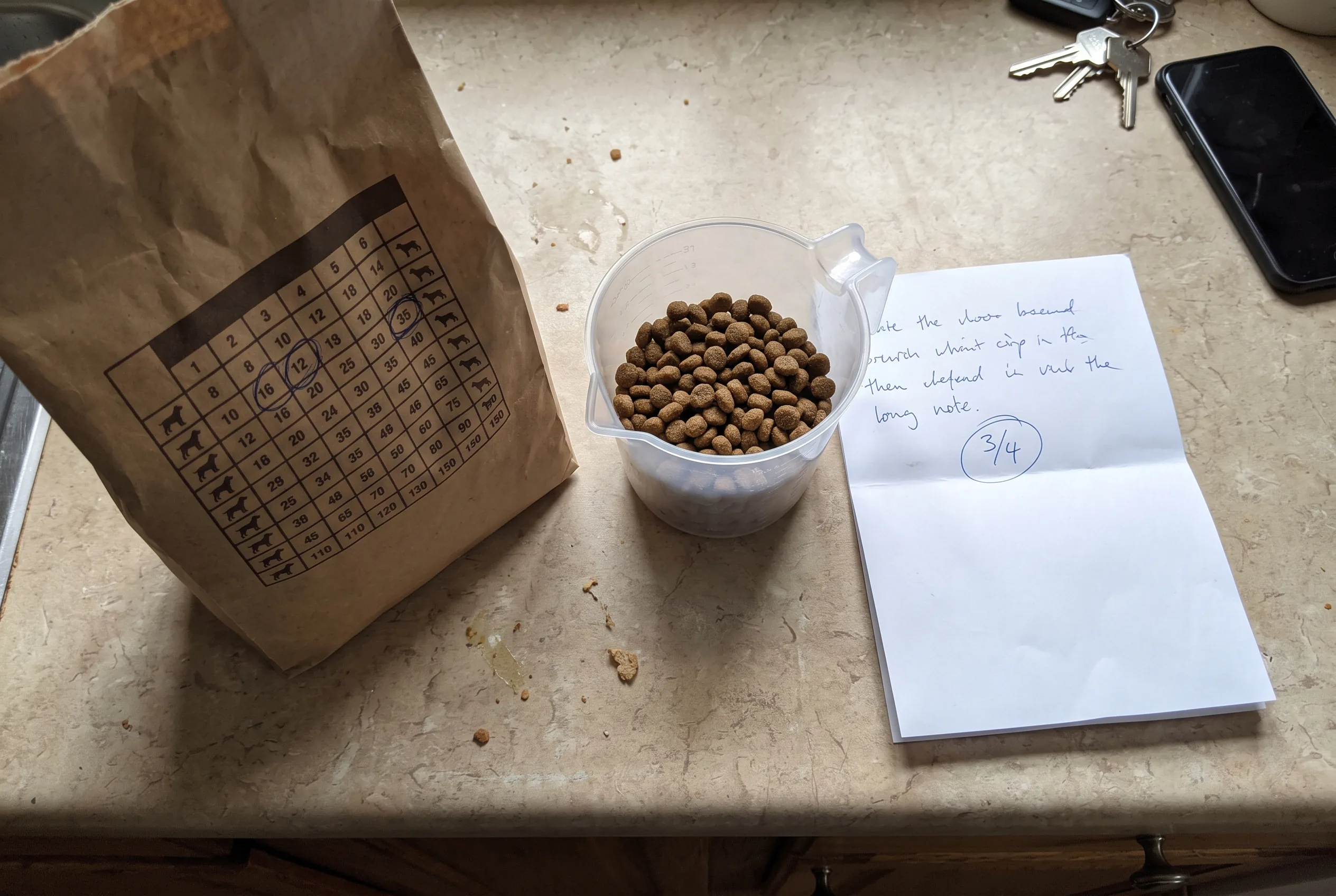
Then you got home and looked at the bag. The bag says 4 cups. The vet said 2. And the one evening you tried 2, he acted like you had forgotten to feed him.
Here is what I want you to know first. You are not a bad owner. You fed him what the bag said. You gave him treats because he is your dog and he looked at you a certain way. This is where love gets you. It gets almost 6 in 10 dogs in this country.
So let’s stop there for a second. No lecture. You already got the number. What you didn’t get is the how.
That is what this article is.
The Bag Feeds the Dog He Is. The Vet Is Talking About the Dog He Should Be.
The feeding chart on the bag is not lying to you. It is just answering a different question.
It is written for an active dog at his current weight. If he weighs 70 pounds and should weigh 60, the bag is feeding a 70-pound dog. Every day. That is exactly how he stays at 70.
The vet’s number is for the 60-pound dog. That is why it looks so small next to the chart. It is not a typo, and it is not her being harsh. It is the amount that gets him to where he should be instead of keeping him where he is.
Neither of you is wrong. You are feeding two different dogs.
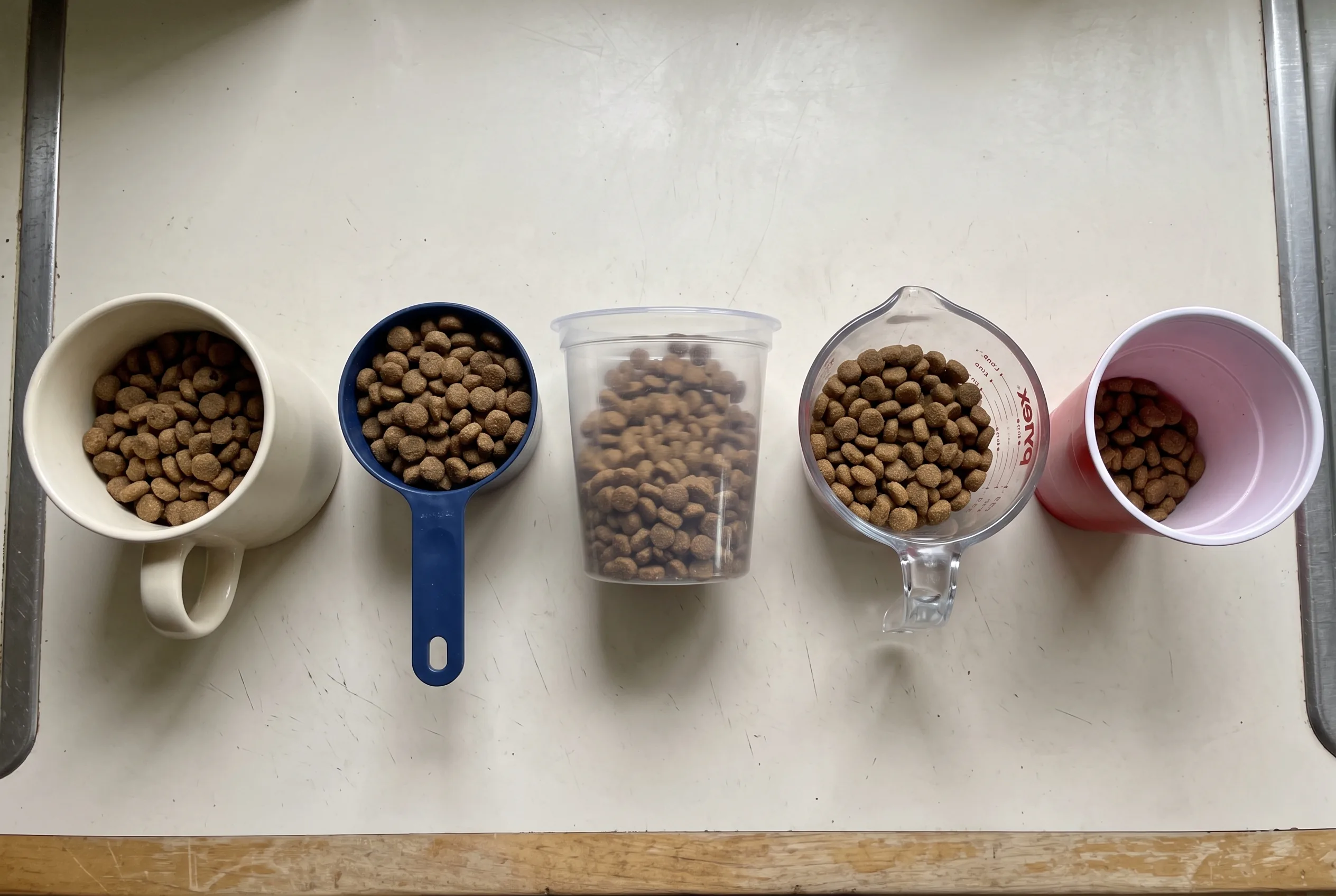
One more thing about cups, because this trips up almost everyone. A coffee mug, the plastic scoop that came in the bag, and a real measuring cup are three different amounts. Only 1 in 5 owners measures their dog’s food. The rest of us eyeball it, and eyeballing always runs heavy. Only 3 in 100 owners know how many calories they are feeding. If you don’t, you are in the company of nearly everyone who has ever owned a dog.
So before anything else, get a real measuring cup and put it next to the bag. That one change is worth more than any product on this page.
The Number Was Right. The Bowl Was Wrong.
Say you do it. You measure. You cut him to the vet’s amount tonight.
The bowl looks half empty. You can see it, and so can he. He finishes it in forty seconds and looks up at you. Then he follows you to the couch. Then he sighs at you. Labs and Beagles in particular have a sigh for this exact situation.
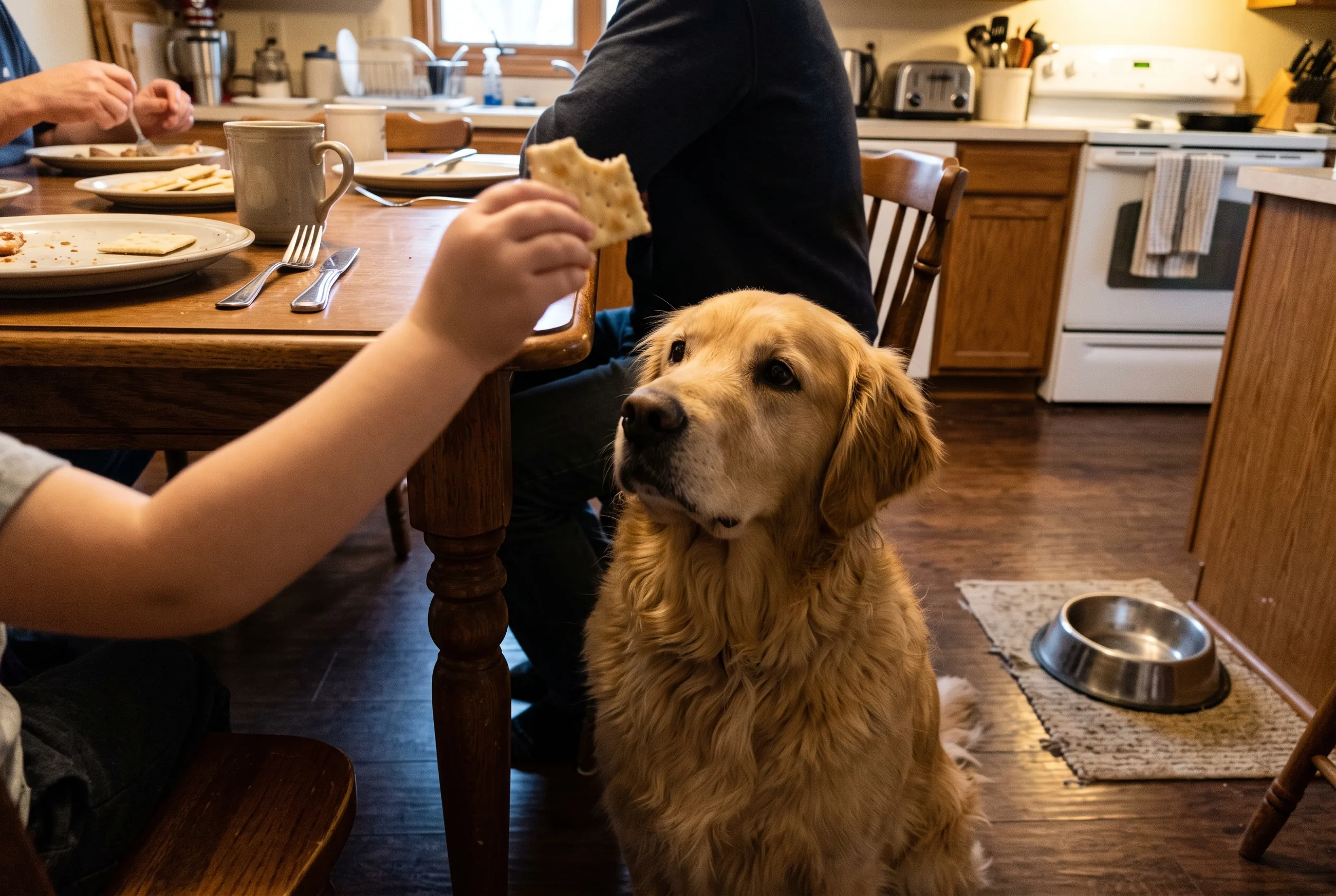
Your partner walks in and says he looks hungry. Your kid slips him a cracker under the table. Your mother, on the phone, says “he’s a big boy, he needs to eat.”
By day ten the bowl has crept back up to where it was. Nobody remembers deciding that. It just happened, one handful at a time.
A smaller portion has to survive the people who love the dog. And it can’t, as long as it looks like less.
This is the part no feeding chart accounts for. A smaller portion has to survive the people who love the dog. And it can’t, as long as it looks like less.
I have watched this happen in hundreds of families. It is not a willpower problem. It is a design problem. You were handed a number and a half-empty bowl and told to hold the line against your own household. Almost nobody can. I’m not sure I could.
Make the Smaller Portion Look Like a Meal
Think about soup.
A big bowl of broth with vegetables fills you up on fewer calories than a small plate of crackers. It isn’t a trick. Water and fiber take up room, in the bowl and in the stomach. You feel like you ate a meal, because you did.
Dogs work the same way. If you give a dog less kibble but more to eat, dinner stops feeling like a punishment. He eats a full bowl. You fed him the vet’s number. Your partner looks at the bowl and sees dinner, not a diet. Nobody has to be the bad guy.
If you give a dog less kibble but more to eat, dinner stops feeling like a punishment.
Owners have been doing a rough version of this for years. Green beans instead of a quarter cup of kibble. A spoon of pumpkin. Water stirred into the bowl. All of it works a little, for the same reason. It is just messy, it is not measured, the dog picks around the beans, and the pumpkin has a well-known downside if you get the spoon wrong.
What I wanted for my clients was the same idea, done properly: measured per pound, something the dog actually wants to eat, and something a second person in the house can do without asking.
Four Weeks, Four Steps
The Plan (Screenshot This)
- 1.Find his target weight. The vet told you. If it was vague, call the front desk and ask, “What should he weigh?” It is a fair question and they will answer it.
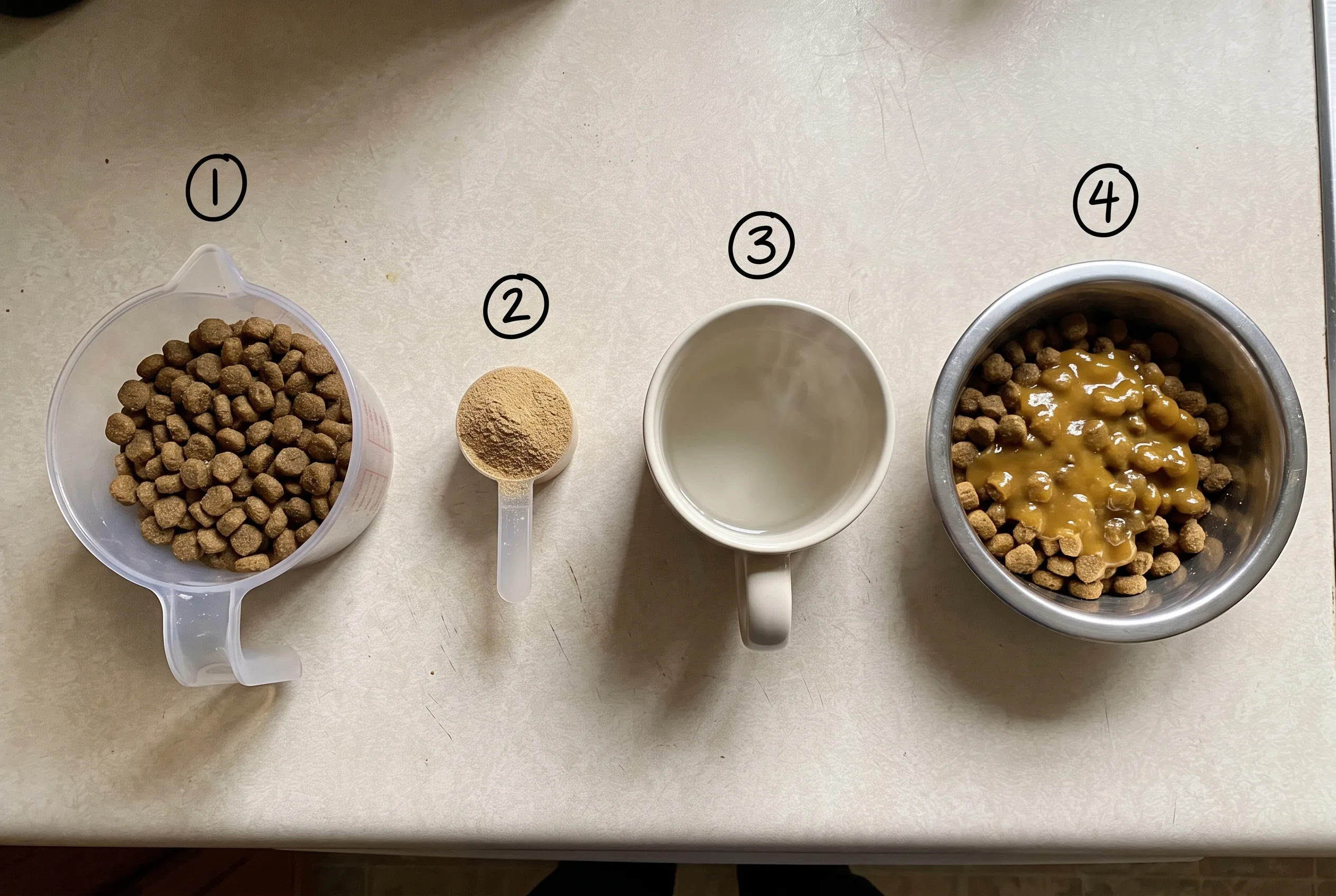
- 2.Measure his kibble for that weight, not his current one. Use a real measuring cup. Look up the target weight on the bag’s chart, take the lower end of that row, and split it over two meals.
- 3.Keep the bowl full with BOWLFUL. One scoop of powder per 22 pounds of dog per day, split over the two meals. Stir into warm water, wait a minute or two, pour it over the kibble. Week 1, feed his old portion with the gravy so he gets used to it. From week 2, step the kibble down toward the target amount, up to 15 percent less in the standard plan.
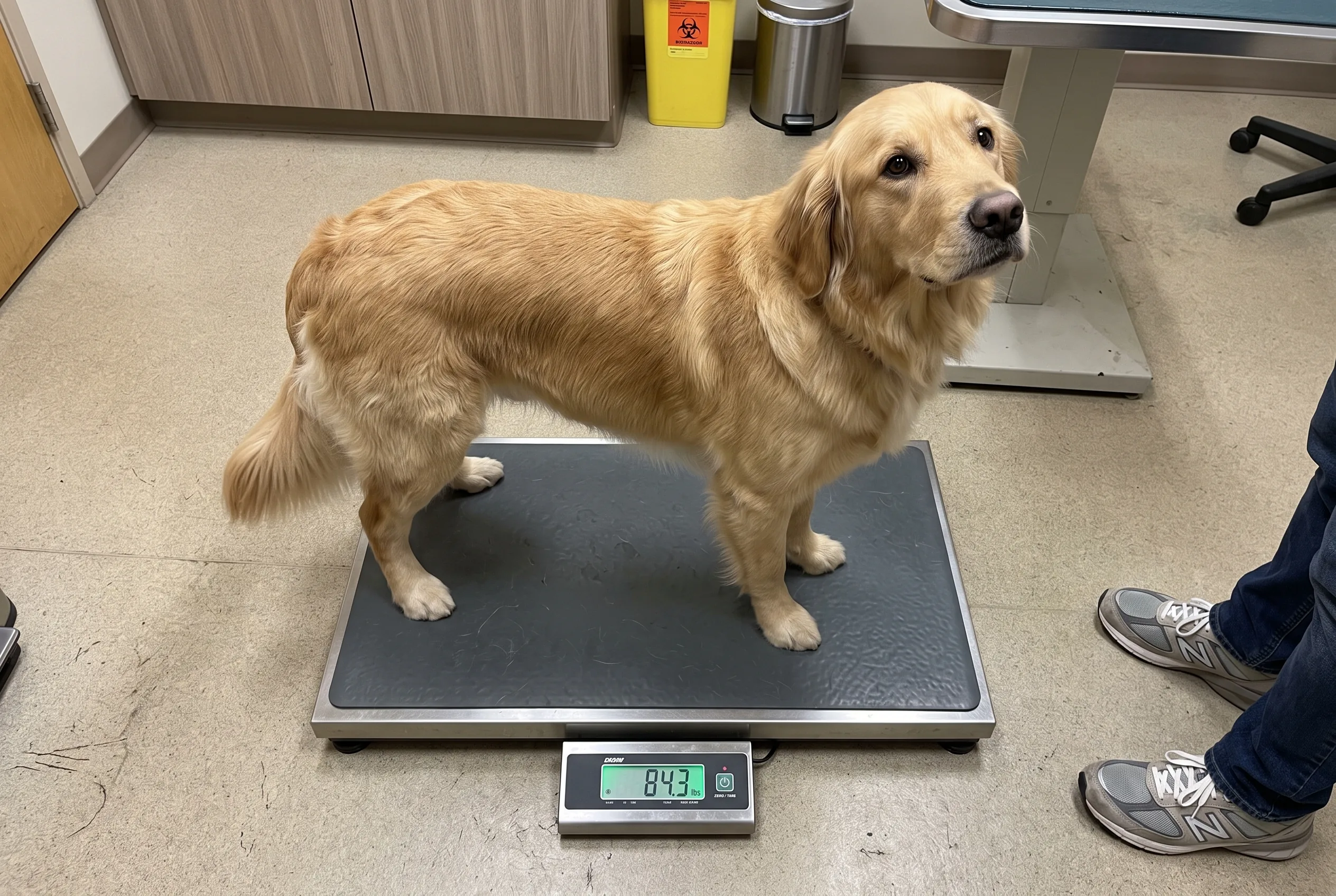
- 4.Weigh him every two weeks. A safe pace is 1 to 2 percent of his body weight a week. A 60-pound dog should lose about half a pound to a pound a week. Slow is correct. If nothing moves by week 4, the calories are coming from somewhere else: treats, plate licking, or a second feeder.
Get everyone in the house on this one plan. Put the scoop and the measuring cup next to the bag. Say it out loud at dinner once: if it’s not in the cup, it’s not dinner.
The Tool That Makes the Vet’s Number Survivable
BOWLFUL is a powder that turns into a thick chicken gravy when you mix it with warm water. It takes a minute or two. You pour it over a smaller portion of the kibble your dog already eats.
The gravy is mostly water and fiber, about 49 percent fiber in the powder, with chicken broth and chicken liver so it tastes like something a dog wants. It does one job: it makes the bowl look and feel like dinner while you feed the vet’s amount.
It does not make a dog lose weight by itself. I want to be clear about that, because half the products in this category are not. Feeding the right amount of kibble does the weight loss. BOWLFUL is what lets you keep doing it past day ten, when the stare and the sighs and the cracker under the table would normally win.
One scoop per 22 pounds per day. A 600-gram can lasts a 22-pound dog about two months and a 44-pound dog about a month. You don’t switch foods. You don’t start a standoff over a new kibble. You feed less of what he already likes, and you pour this over the top.
What Owners Tell Me
These are owners who gave me permission to share their numbers.
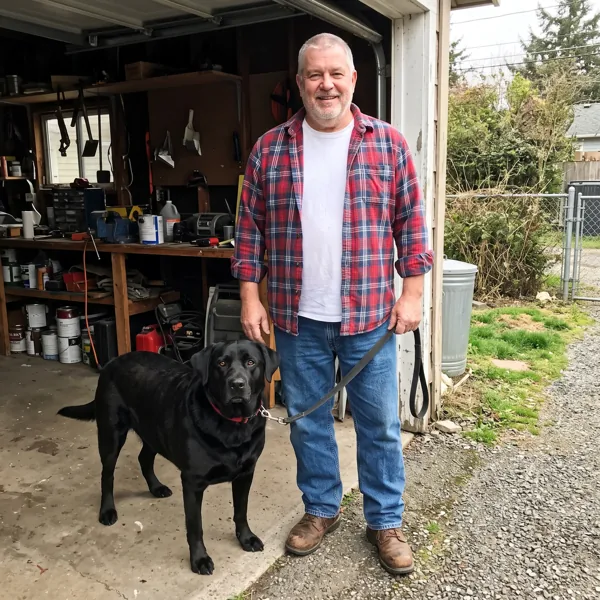
Michael and Duke
Labrador mix, 6
78.4 lb to 74.9 lb in 8 weeks · vet's target about 70 lb · 3½ scoops a day
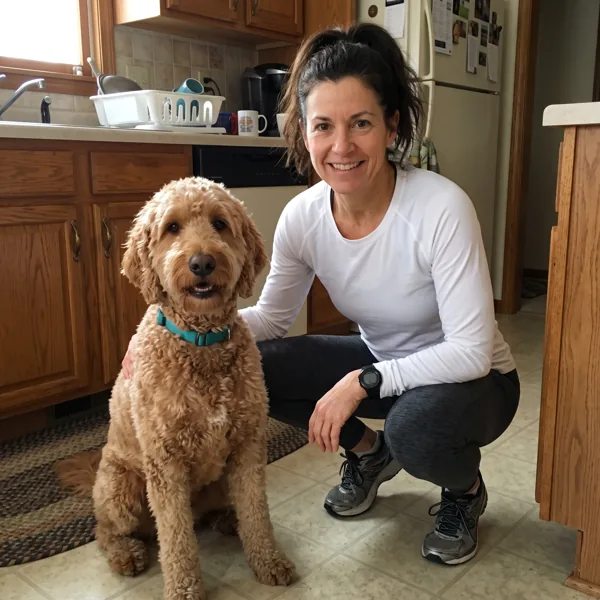
Lisa and Rosie
Labradoodle, 5
“The amount is right there. Nobody has to guess anymore.”
48.9 lb · three people feed her · 2¼ scoops a day
Questions Before You Start
Is the vet even right?
Usually, and usually she understated it. When a vet says “a pound or two,” the dog is often more than that, because vets soften it to keep the conversation friendly. Do the three-second check at home: look down at him from above and see if there is a waist behind the ribs. Then run flat fingers along his side. If you have to press to find ribs, she’s right.
He's a Lab. They're all like that.
Most of the Labs you see at the park are a few pounds over, which is why a lean one looks skinny to us. We have gotten used to the wrong picture. The breed is not the reason. The bowl is.
Won't a topper add calories?
Peanut butter does. Cheese does. BOWLFUL is mostly water and fiber, and its small calorie count is already counted in the plan.
More fiber, more poop?
If you went from zero to a full scoop overnight, maybe. That’s why week 1 exists. Introduced gradually, most owners see normal or slightly firmer stools.
He's picky.
The base is chicken broth and chicken liver. Most dogs go for it at the first meal. If your dog won’t eat chicken at all, this isn’t for him.
I already have a bag of prescription weight food.
Finish it if he eats it. BOWLFUL goes over any kibble, including that one.
We have two dogs.
Feed them in separate rooms for the first few weeks. The skinny one will otherwise eat the heavy one’s dinner, and the heavy one will eat everything else.
For and Not For
For:
- adult dogs your vet wants lighter,
- households with more than one feeder,
- owners who want a number instead of “a little less.”
Not for:
- puppies,
- pregnant or nursing dogs,
- underweight dogs,
- dogs on a prescription diet for a diagnosed condition (ask your vet first),
- dogs allergic to chicken.
What to Tell the Vet Next Time
Next visit, bring the number.
“He’s at 64. We’re feeding for 60, measured, two meals, gravy over the top. Down two pounds in a month.”
That is the conversation I would like to have with every owner who walks in. Not “we tried, he was starving, we gave up.” Just the number, the method, and a dog who has stopped sighing at the couch.
It starts tonight, with a measuring cup.
Evidence Sources
- Association for Pet Obesity Prevention, 2022 U.S. Pet Obesity Prevalence Survey: 59% of dogs classified as overweight or obese. APOP 2022
- University of Liverpool, 2019: only 1 in 5 owners always measures their pet's food. University of Liverpool
- Tufts University Petfoodology: about 3% of owners know how many calories they feed. Petfoodology
- Cornell Riney Canine Health Center: safe weight loss of 1 to 2% of body weight per week. Cornell
These sources support the general discussion of canine weight. They are not studies of BOWLFUL.