
Advertorial · Updated August 21, 2026 · 9 minute read
DOG HEALTH • EVERYDAY MOBILITY
5 Signs Your Dog May Not Be “Just Getting Older”
Shorter walks. A pause before jumping. More time on the bed. It is easy to call all of it “age.” But when several small changes appear together, there may be another factor hiding in plain sight.
Author’s note: As a veterinarian, I regularly speak with dog owners who notice changes in movement and assume age is the complete explanation. In this article, I want to show you the additional factor I believe deserves a closer look: body condition and the load a dog carries through everyday movement.

By Dr. Daniel Whitmore, DVM
Veterinarian focused on senior canine health and healthy aging · August 11, 2026 · 9 min read
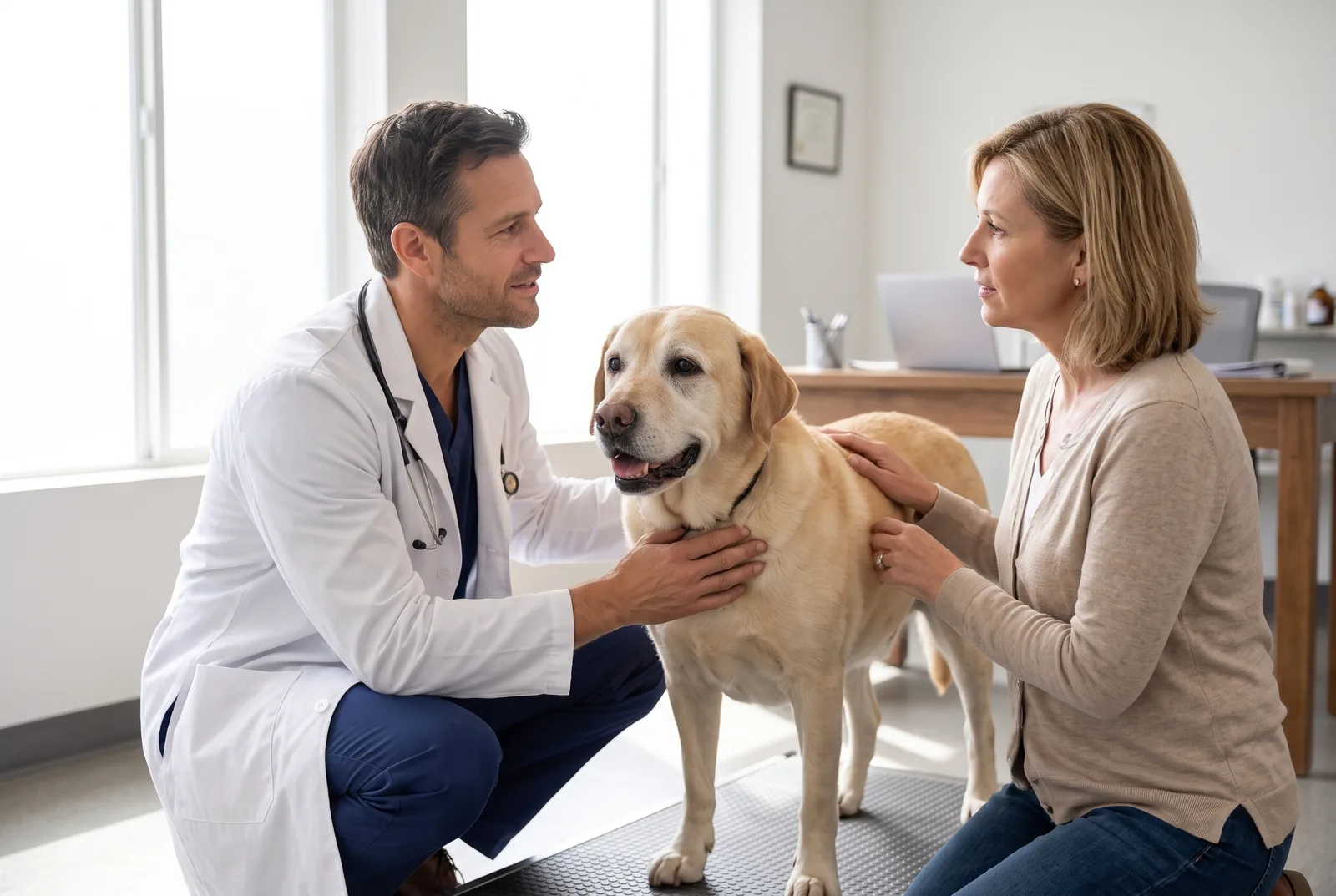
“He’s just getting old.”
It is one of the most natural explanations a dog owner can make.
And sometimes it is true.
Older dogs do sleep more. They recover differently. They stop moving through the world with the same endless energy they had at three years old.
But there is a problem with the phrase “just getting old.”
It can end the investigation too early.
A walk gets shorter, so the route changes.
The jump into the car becomes harder, so the dog gets lifted.
Play ends sooner, so the ball gets thrown fewer times.
Little by little, the household adapts.
And because every change has an explanation, nobody asks the more important question:
What changed besides his age?
That question matters because one of the most important physical changes can happen so slowly that owners barely notice it at all.
Aging Rarely Announces Itself. It Changes the Routine One Small Step at a Time.
Most owners do not wake up one morning and think, “My dog suddenly became old.”
Instead, normal quietly gets redefined.
1. The Walk Keeps Getting Shorter
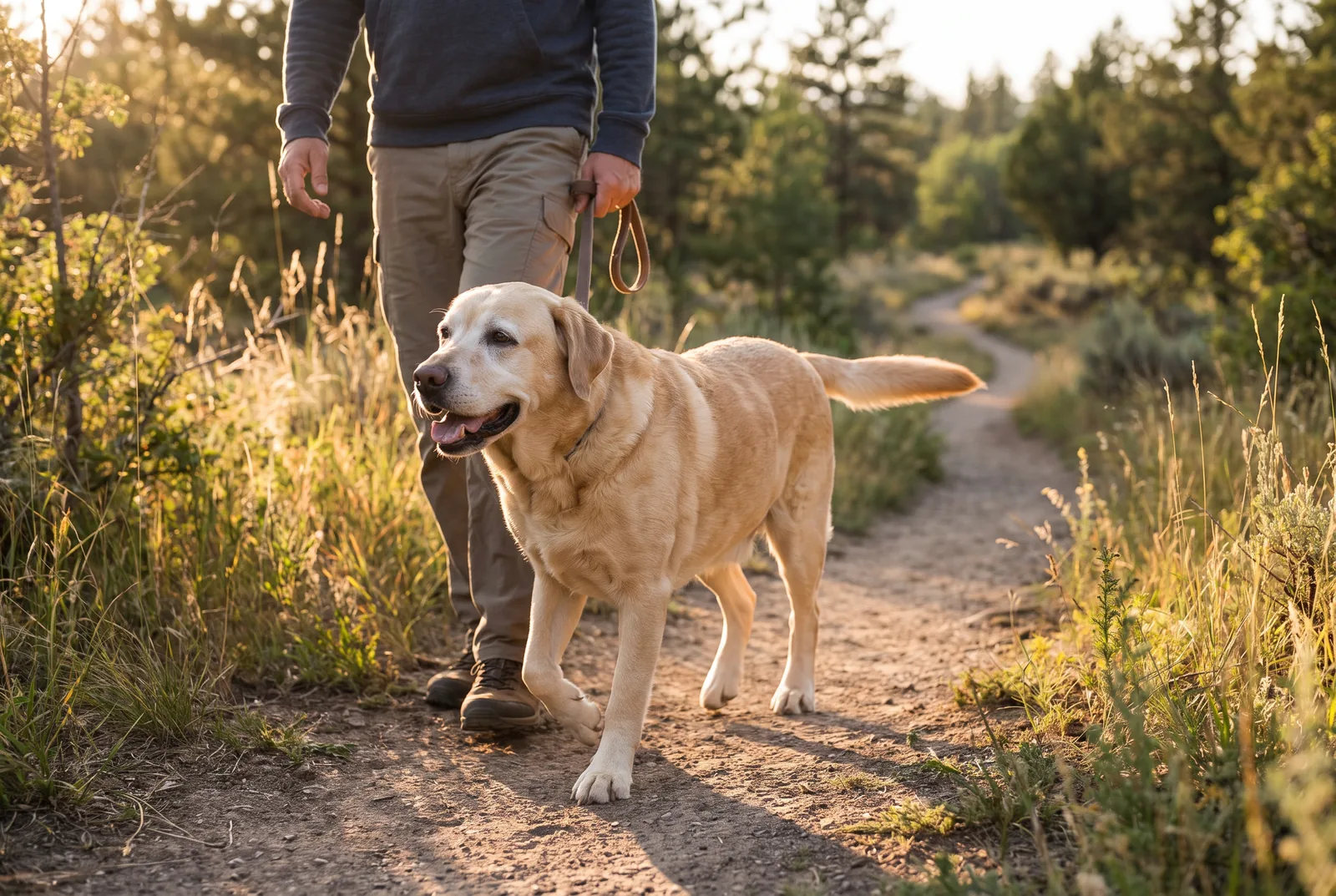
The leash still creates excitement. But the pace is slower. Your dog falls a few steps behind or seems ready to turn home earlier.
2. The Couch or Car Requires a Pause
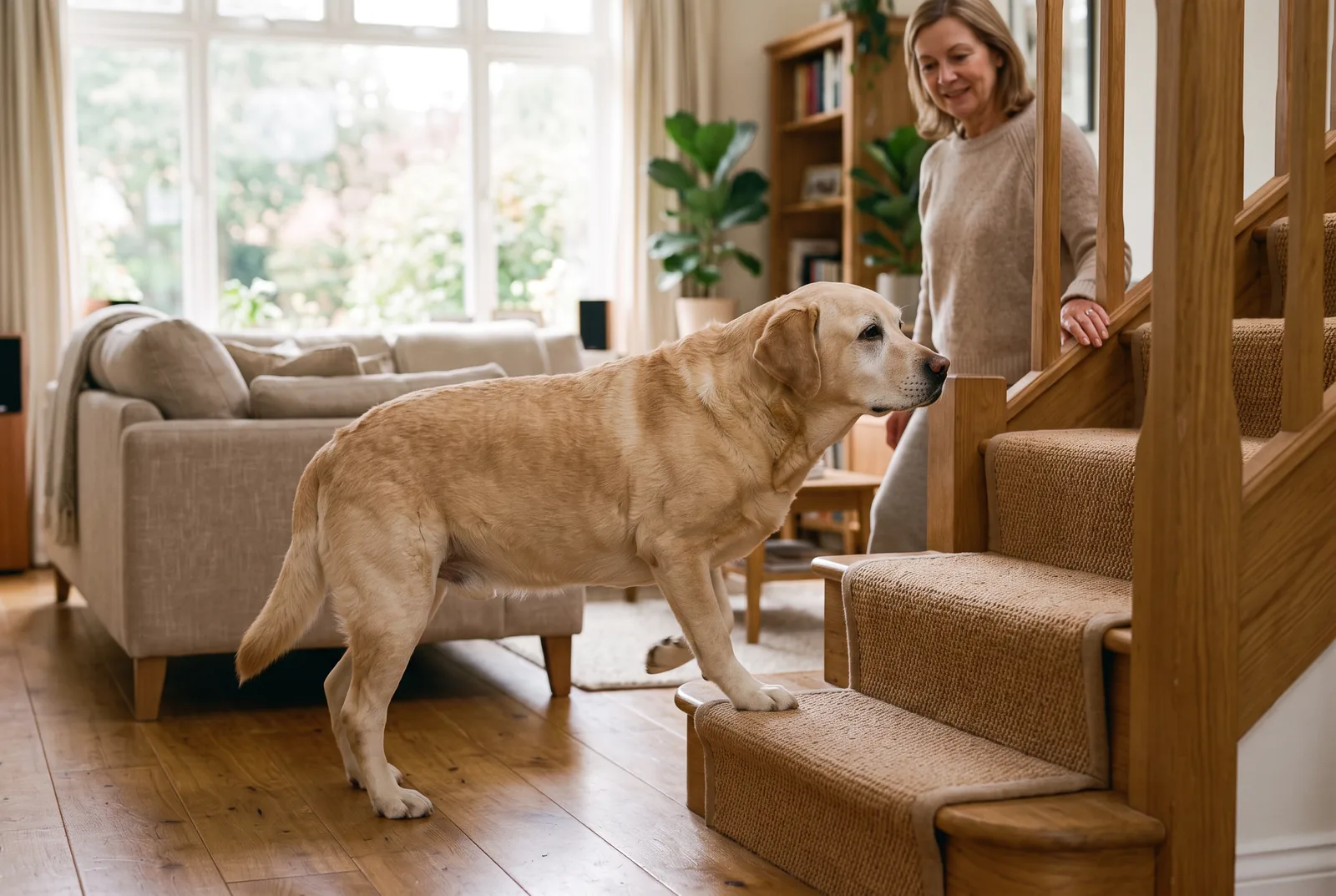
What used to happen without thought now takes preparation. A hesitation. A second attempt. Sometimes a look toward you for help.
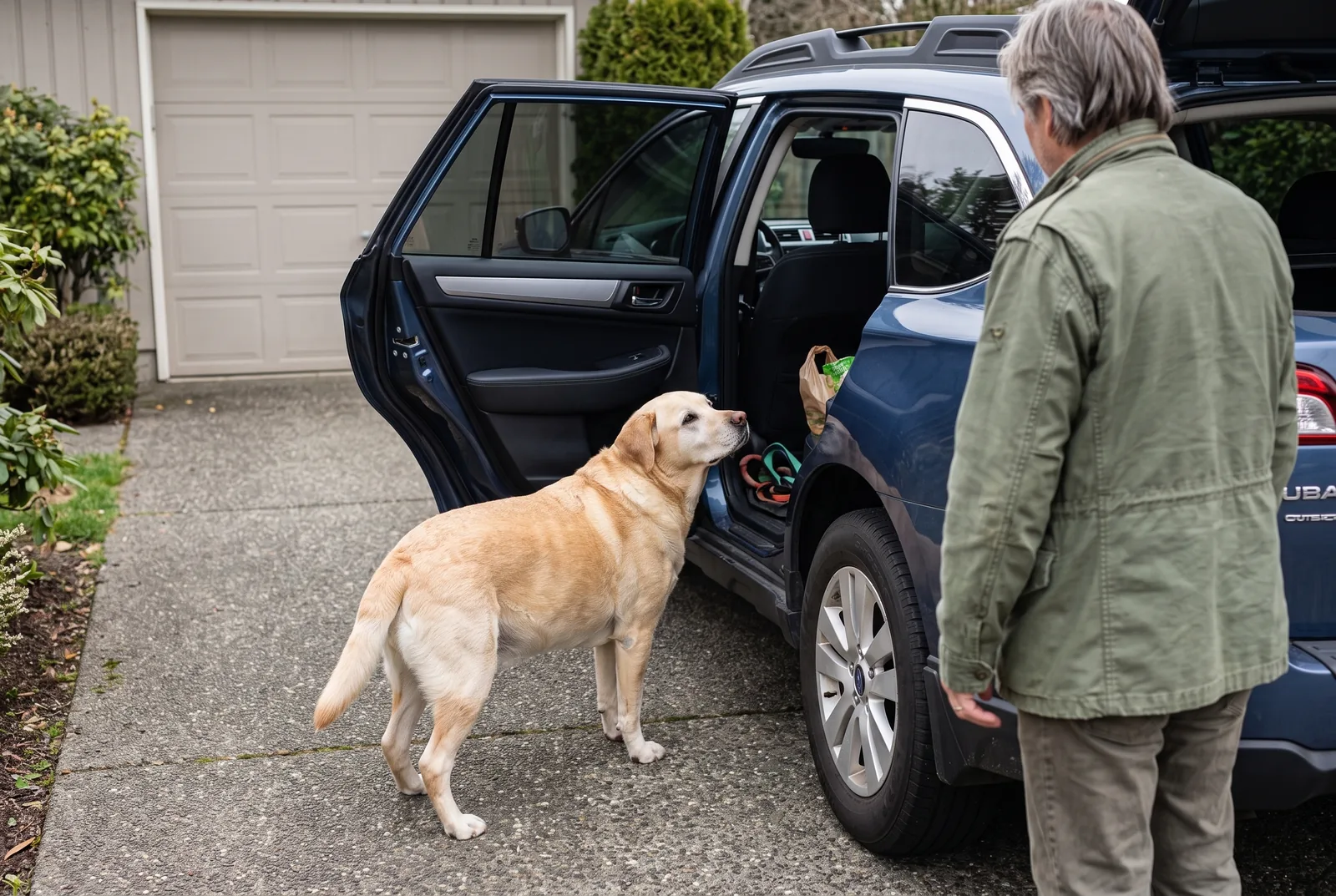
3. Play Still Starts With Excitement, But Ends Much Faster
The dog still wants the toy. The enthusiasm is still there. The difference is how quickly rest takes over.
4. Getting Up Is No Longer Automatic
After a long nap, there is a moment between deciding to move and actually moving.
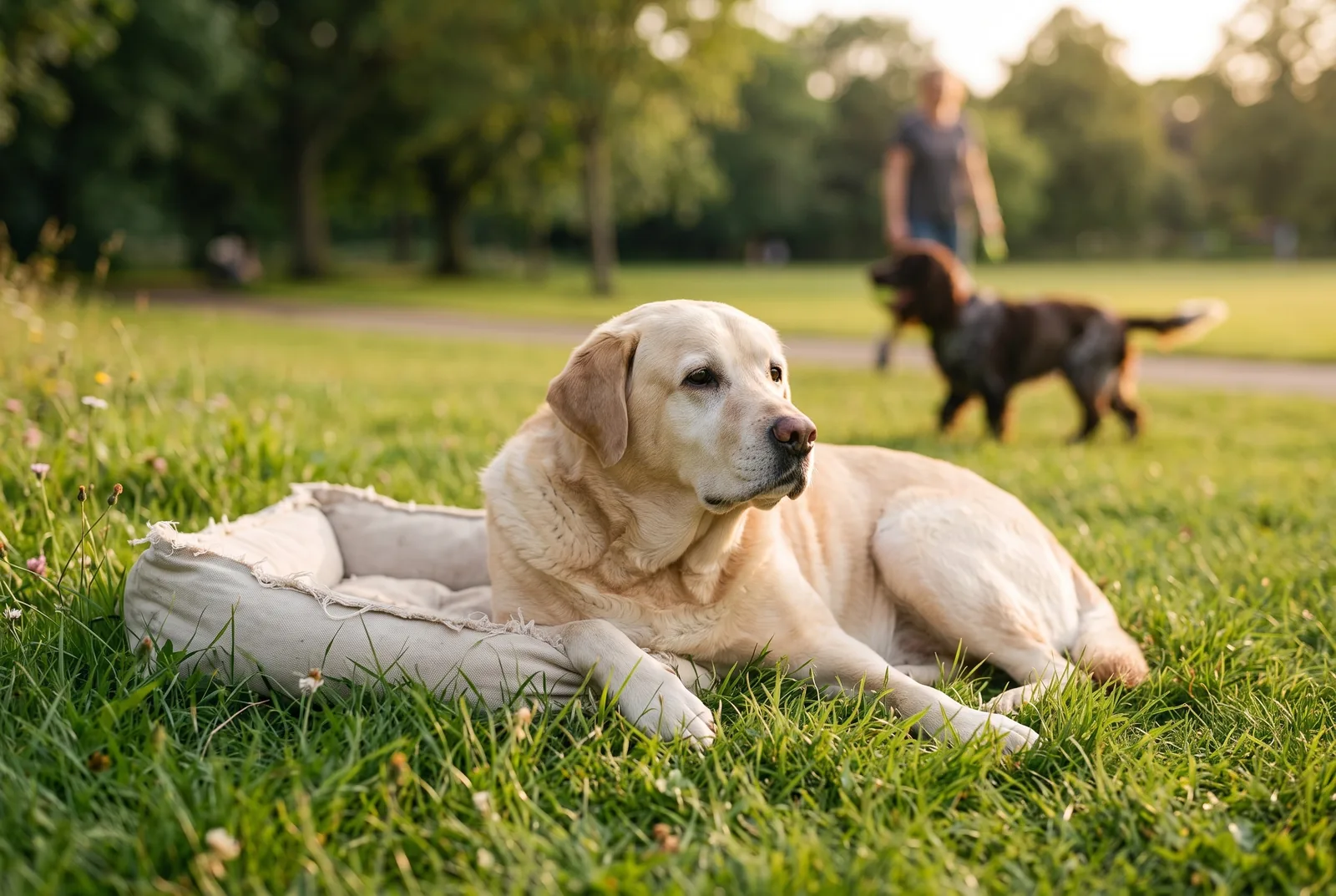
5. Rest Has Quietly Replaced Parts of the Day That Used to Involve Movement
Not one dramatic change. Just less movement here, less movement there, until the slower routine starts feeling normal.
If you recognized one sign, it may mean very little.
If you recognized several, the pattern is worth looking at more closely.
Because “he is older” can be true without being the whole answer.
Age Changes the Dog. But Age Does Not Explain Every Change Around the Dog.
Aging is real.
That is exactly why the factors that change alongside age become so important.
Activity can decrease.
Food portions can stay the same.
Treats can become more frequent.
Muscle can change.
Body shape can gradually soften.
And because those changes happen over months instead of overnight, owners adjust to them almost invisibly.
So instead of asking only:
“Is he slowing down because he is older?”
Ask the more useful question:
“Has his body changed while he has been getting older?”
That is where the overlooked factor begins to appear.
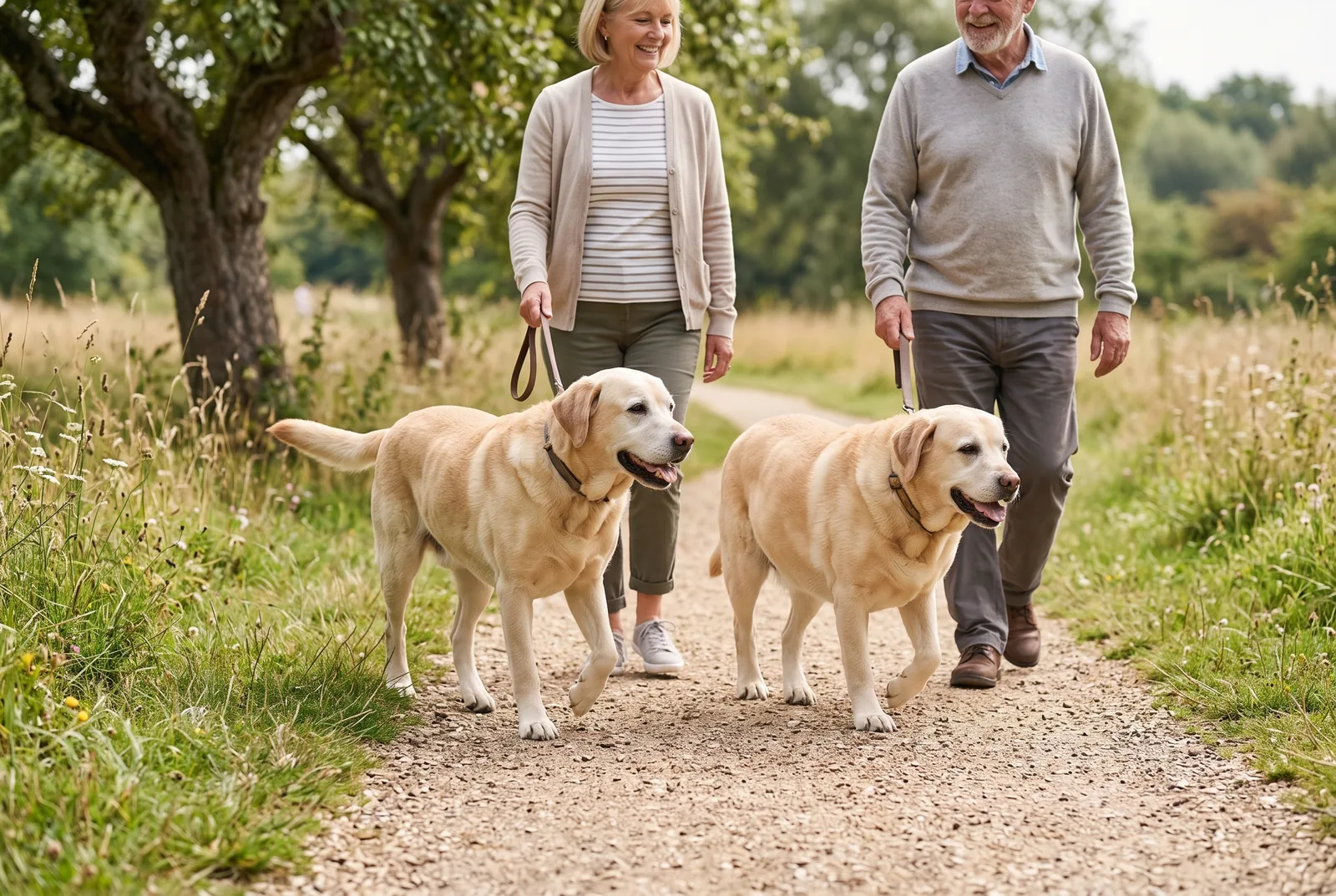
The Extra Weight Owners Often Never See Arrive
Weight gain usually does not look dramatic while it is happening.
The waist becomes a little less visible.
The ribs become a little harder to feel.
The body becomes a little rounder.
Then that shape becomes familiar.
This is the trap: what changes slowly starts to look normal.
The size of that blind spot is measurable. In the Association for Pet Obesity Prevention’s 2022 U.S. prevalence survey, 59% of dogs were classified as overweight or having obesity. Yet in a subsequent owner survey, only 17% of dog owners described their own dog as overweight.
That gap is why I ask older dog owners to separate two observations that often get bundled together: “he is aging” and “his body has changed.” Both can be true at the same time.
And when an older dog is also slowing down, it becomes easy to blame every change on age while overlooking the body that now has to move through every walk, stair and jump.
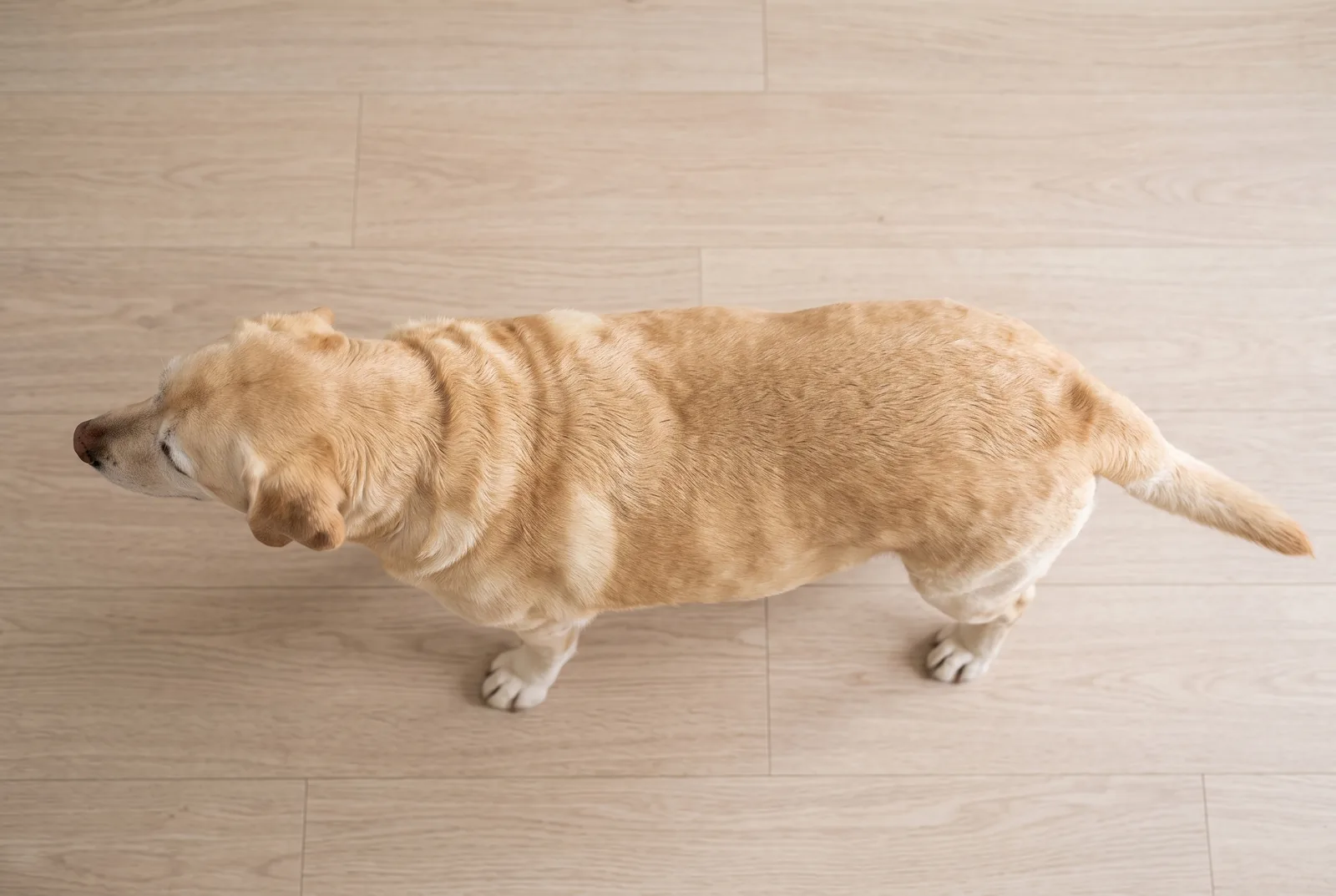
The 30 Second Check
You do not need a scale to notice the first clues.
Look from above. Is there still a visible waist behind the ribs?
Feel the ribs. Can you feel them easily with light pressure?
Look from the side. Is there a clear upward tuck behind the rib cage?
If those three checks make you look twice, body condition deserves more attention than appearance alone.
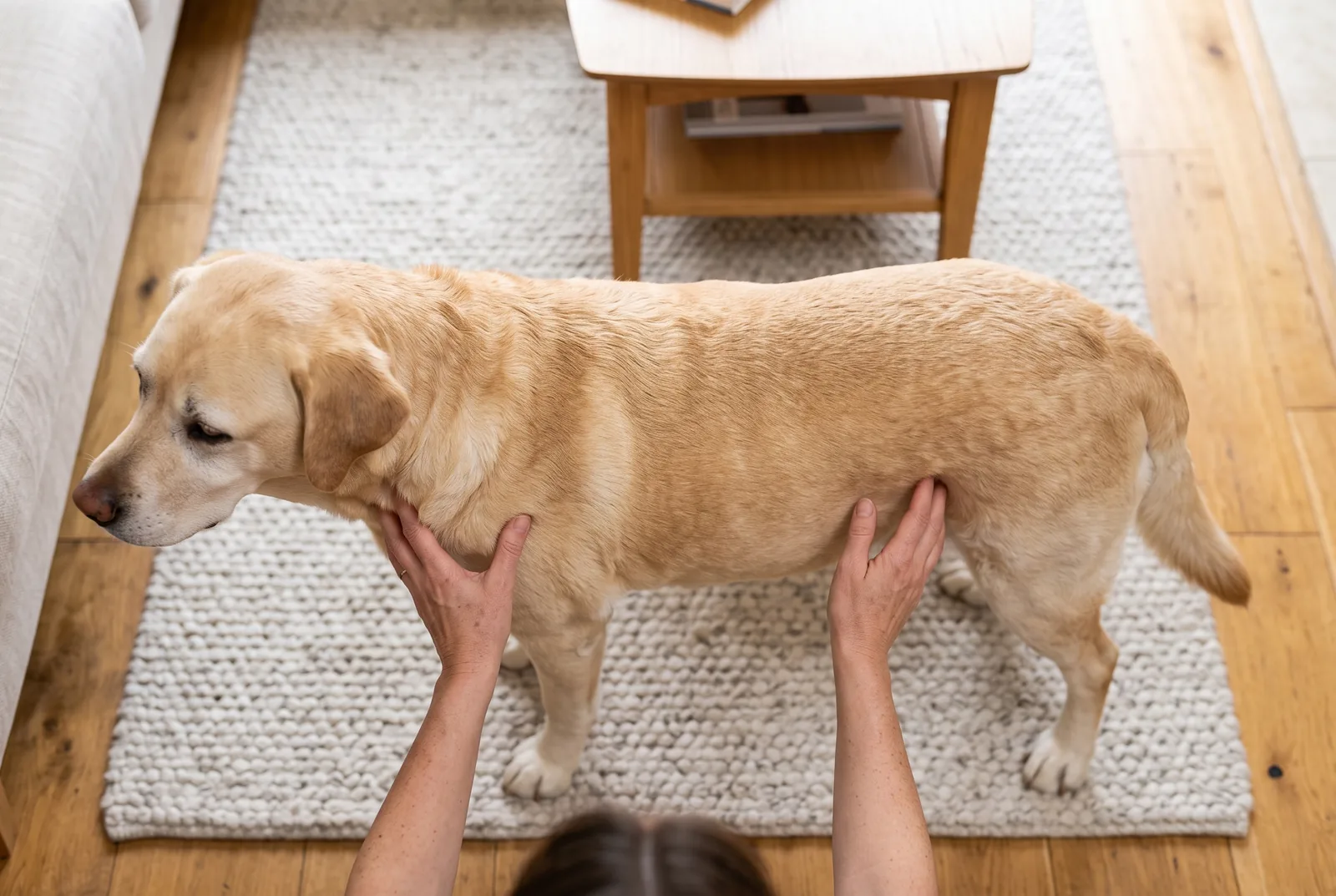
Your Dog Carries His Body Through Every Part of His Day
A heavier body does not stay in the bowl or on the scale.
Your dog moves it.
He moves it when he gets up.
He moves it on the walk.
He moves it up the stairs.
He moves it into the car.
He moves it when he turns, plays and jumps.
That is why healthy body condition is not really a beauty conversation.
It is a movement conversation.
The important question is not:
“Does my dog look overweight enough for me to care?”
It is:
“Is he carrying more than he needs to through every movement he still wants to make?”
That is a very different question.
Aging Is Inevitable. Excess Body Condition Is Not.
Aging cannot be stopped. That is exactly why I care so much about the parts of an older dog’s physical picture that are still changeable.
The strongest long term example comes from a lifetime study of 48 Labrador Retrievers. Dogs fed 25% less than paired littermates stayed leaner and had a median lifespan 1.8 years longer, with later onset of chronic disease, especially osteoarthritis.
That study does not tell you to cut your own dog’s food by 25%, and it was not a study of any weight-management product. It tells us something more basic: long term body condition is not cosmetic background.
So when I look at an older dog, I am not trying to make him look young. I am asking whether one modifiable factor is being mistaken for an unavoidable one.
The walk, the toy, the trip to the door when the leash comes out, those are the stakes. Age gets the final word eventually. It does not need to get credit for every change along the way.
The Hardest Part of Weight Management Happens at Dinner, Not at the Scale
Once an owner decides weight matters, the obvious answer is immediate:
Put less food in the bowl.
Simple idea.
Harder reality.
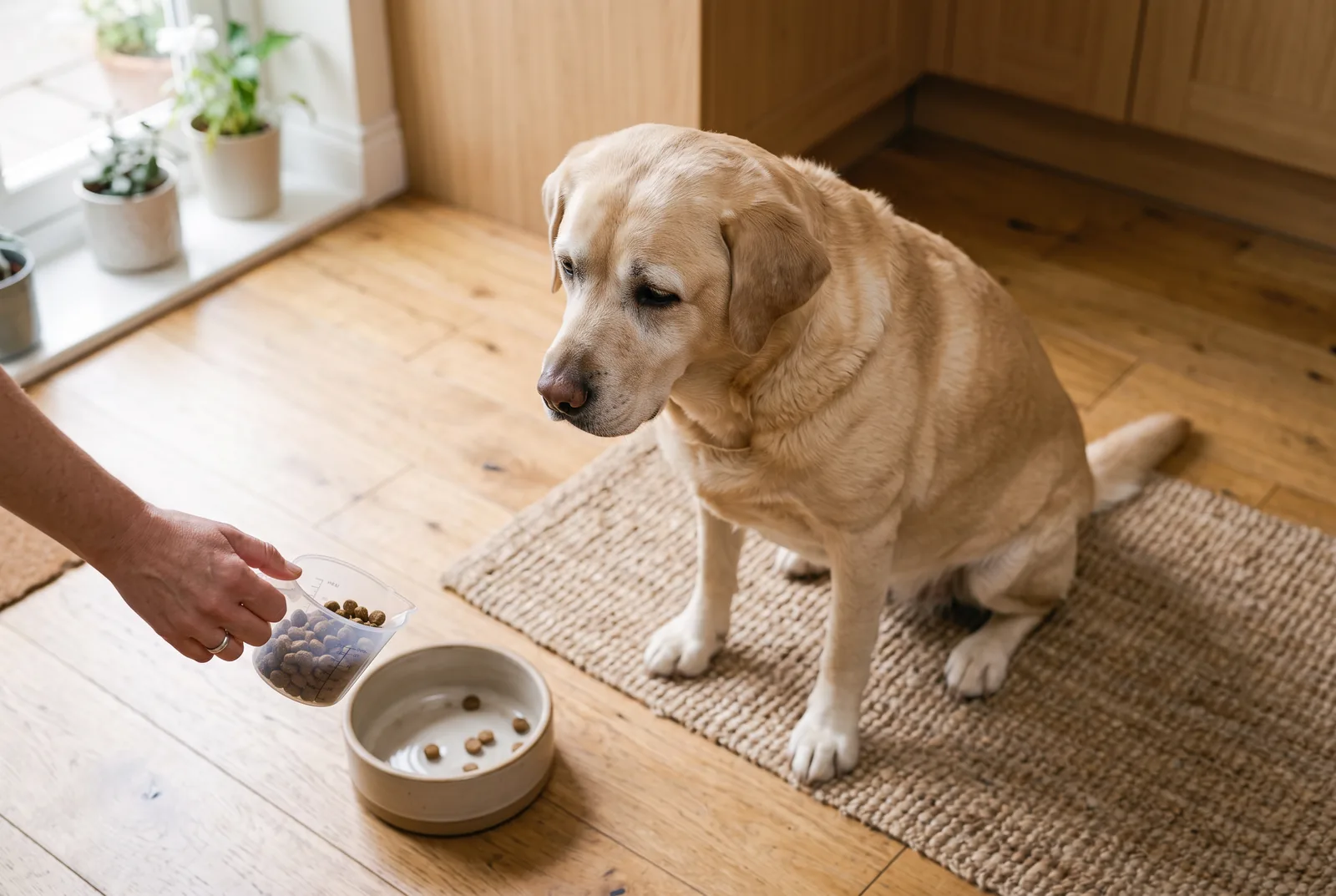
The familiar bowl suddenly looks half empty.
Then comes the look.
The dog follows you back toward the kitchen. He waits. He may whine. Someone else in the house sees the bowl and thinks you are underfeeding him. A child slips him a treat because “he is old, let him enjoy it.”
That last sentence is especially powerful with senior dogs. Age becomes permission to override the plan.
A chew appears later. Another family member assumes the dog has not eaten yet. A few days of perfect measuring slowly become the old routine again.
I call this the senior dog guilt loop: you want to protect his remaining years, so restriction feels emotionally wrong, even when a measured feeding plan is exactly what his body condition requires.
The issue is not that calorie control is wrong.
The issue is that a plan that feels difficult at every meal is difficult to repeat for weeks and months.
And consistency is where weight management is won or lost.
Do Not Make an Older Dog’s Dinner Feel Smaller. Make the Calorie Base Smaller.
A useful analogy is a bowl of broth based soup. Water adds physical volume, so the bowl can look and feel more substantial than a compact serving of calorie dense dry food.
That is the practical idea I want for an older dog: make the calorie dense base smaller, then build meal volume around it with water and fiber.
The calorie reduction still comes from the measured food plan. The added volume does not erase calories or treat aging. It helps solve the emotional and visual problem that makes owners abandon the plan.
For senior dogs, that matters because consistency has to survive affection. The routine should let an owner feel that they are still giving a real meal, not taking one away.
One Approach I Looked At: BOWLFUL by Holypup
BOWLFUL by Holypup is not an anti aging product and it is not a mobility treatment. It is a feeding tool for the one part of this aging conversation an owner can directly structure at home: the bowl and the body condition it helps shape over time.
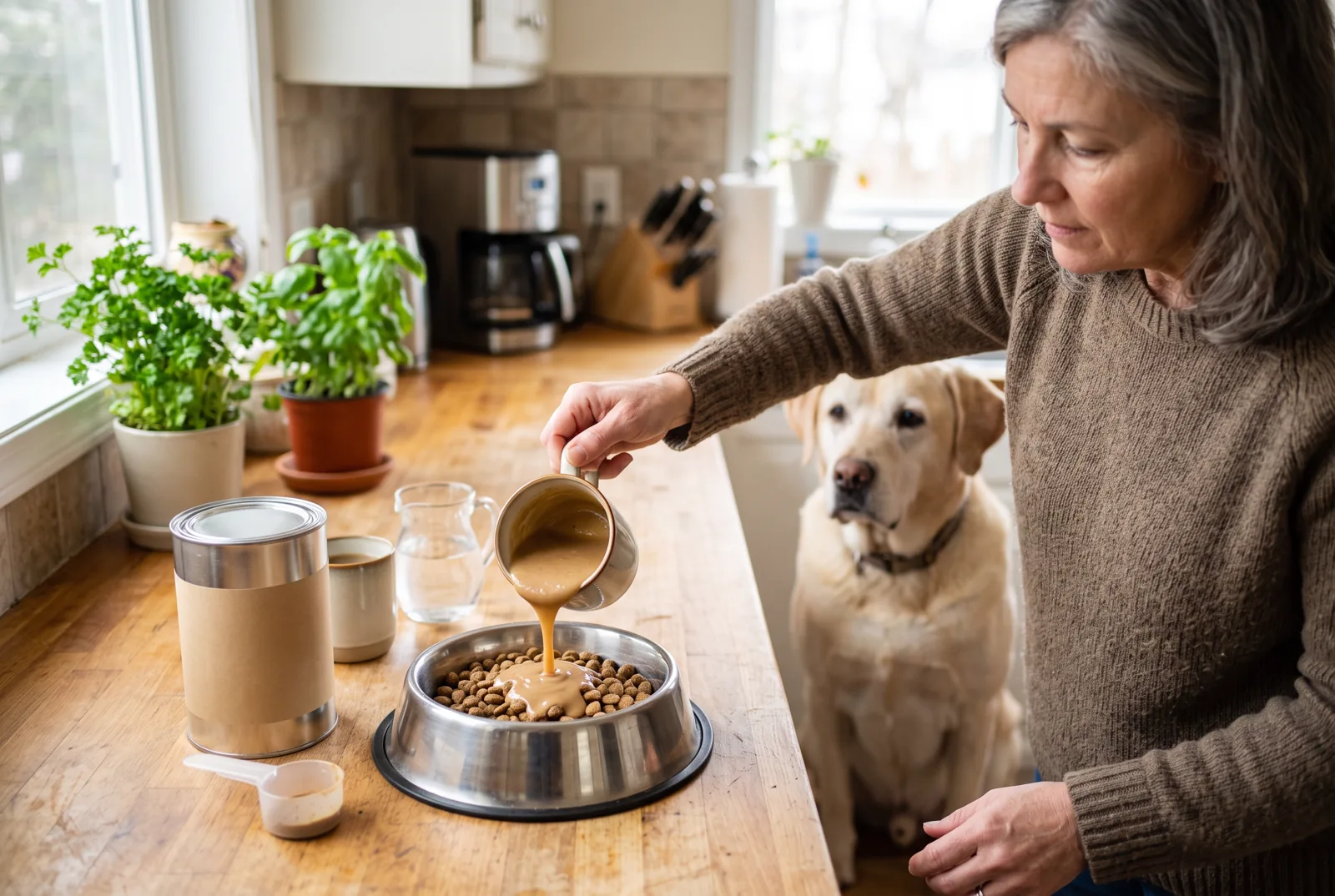
Instead of sprinkling a powder over the bowl, the measured BOWLFUL serving is mixed with warm water. After one to two minutes it thickens into a gravy that is stirred into the dog’s measured regular food.
The formula provides 49% total dietary fiber, with gum arabic, pea fiber, psyllium seed husk and dried beet pulp among its fiber sources. The prepared gravy also adds water and physical volume to the meal.
The routine is phased rather than abrupt. BOWLFUL is introduced gradually first. Once the dog is accustomed to the full serving, the regular food portion is reduced step by step, up to 15% in the standard feeding plan.
49% fiber: nearly half of the powder by weight is dietary fiber, then warm water turns that fiber-rich serving into more physical meal volume.
Up to 15% less base food: sustained for 12 weeks, a 15% daily reduction equals the amount of regular food contained in about 12.6 full daily portions, before accounting for BOWLFUL, treats or other calorie changes.
Timeline: Week 1 introduces the new ritual → Week 2 establishes the full serving → Week 4 has the reduced-base-food routine underway → Week 8 is about making the senior-dog feeding ritual automatic.
That distinction keeps the mechanism honest:
The reduction in regular food is the calorie lever. BOWLFUL is designed to make that smaller portion into a fuller, more structured bowl that is easier to repeat.
For an older dog, that is the relevant role. BOWLFUL does not promise to make the dog younger or treat the reason he moves differently. It gives the owner a practical way to address body condition when that is one of the changeable factors in the picture.
It Changes the Routine Without Replacing the Ritual
For owners who have fed the same way for years, completely changing food can feel like a major disruption.
The interesting part is that the ritual can stay familiar while the bowl changes: same feeding moment, same regular food, but now inside a measured gravy-based routine built around a smaller base portion.
That makes the idea relevant for the owner who already understands the problem but knows that “I will simply be stricter from now on” has not been enough.
“He Is Getting Older” Should Not Be the Last Question You Ask
Your dog will get older.
That part is unavoidable.
But gradual weight gain, unclear feeding routines and the amount of body he carries through his day are not the same thing as age.
If the walks are shorter, the jumps are harder and rest is replacing more of the day, look at the whole picture.
Look at the waist.
Feel the ribs.
Look at the daily feeding routine.
And if body condition has changed, do not wait for the dog to look dramatically overweight before taking it seriously.
The earlier the overlooked factor becomes visible, the earlier it can become actionable.
See How the HolyPup Weight-Management Approach Works
On the next page, I break down how BOWLFUL is prepared as a warm water gravy, how the phased feeding plan works, the current purchasing options and the current guarantee terms.
If the body-condition pattern in this article sounds familiar, review the full plan and decide whether it fits your dog’s routine.
Evidence Sources
- Association for Pet Obesity Prevention, 2022 U.S. Pet Obesity Prevalence Survey and owner perception findings: APOP survey summary
- Kealy RD et al., Effects of diet restriction on life span and age-related changes in dogs, Journal of the American Veterinary Medical Association, 2002: PubMed
- Lawler DF et al., review of the Labrador lifetime study reporting 1.8 years longer median lifespan in diet-restricted dogs: PubMed
These sources support the editorial discussion of body condition, aging and long-term health. They are not studies of BOWLFUL.